Friday, November 20, 2015

Lesson 9: Jeremiah's Yoke November 21-27 2015

Lesson 9November 21-27

Jeremiah's Yoke


Sabbath Afternoon
Memory Text: And he said to them all, If any man will come after me, let him deny himself, and take up his cross daily, and follow me (Luke 9:23).
As we have already seen, God's prophets preached not only through words but also through object lessons. At times the prophets had to live out the messages; it was another way to get the point across.
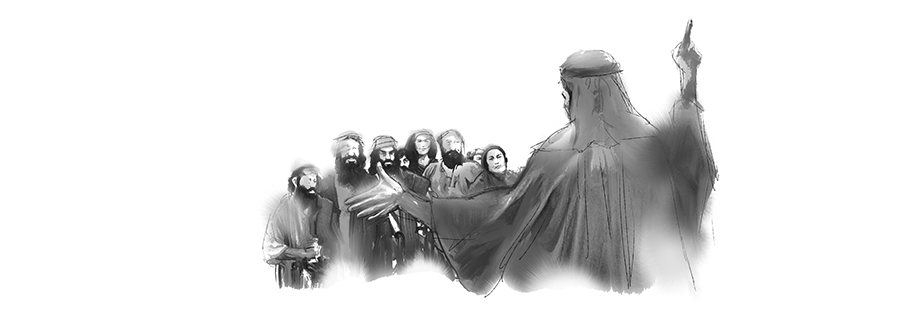
Thus, Jeremiah again was called to live out the words he was to deliver. First, he had to wear a wooden yoke. Thus saith the Lord to me; Make thee bonds and yokes, and put them upon thy neck (Jer. 27:2). That had to have been a burdensome task, even under the best of circumstances; in this case, it became harder because a false prophet challenged what Jeremiah said. This week we can get a powerful look at truth and error contending for the hearts and minds of the people. We will see, too, how a message of grace can also be a false message.
Jeremiah also was forbidden to enter into mourning when others mourned and rejoicing when others rejoiced. In these cases, the point was to help the people realize what was coming because of their sins, and so to repent and obey, lessening the doleful consequence of their sinful actions.
Study this week's lesson to prepare for Sabbath, November 28.
SundayNovember 22

A Solitary Life

No question, Jeremiah's lot in life wasn't an easy one (he would be the first to admit it too!). Things, though, were even harder than we might have imagined.
Read Jeremiah 16:1-13. What was the Lord's message to Jeremiah here? However harsh, in what ways would it have been a blessing to the prophet? (Compare with Hos. 1:1-3.)

In contrast to Hosea, who was to marry a harlot in order to show just how corrupt the relationship had become between the Lord and Israel due to the nation's spiritual harlotry, Jeremiah was to refrain from marriage and from having children altogether. This was something rather rare and extreme for that time and culture. In Israel, starting a family was very important for every young man. Besides the love and companionship between spouses, it was also important to carry on the family name. Why did God forbid Jeremiah from starting a family? So that his own life would be an object lesson on how terrible that time would be when families broke up and when the pain of separation became a heavy burden on the survivors. Jeremiah's lack of family life was a constant warning and lesson for his contemporaries.
Jeremiah's solitary lot extended into other areas as well. He was forbidden to enter a house where there was mourning; this would symbolize the people's unwillingness to respond to God's calls for repentance and revival.
Along with times of mourning, he was not to join their festivals of joy and celebration. This was to symbolize the coming time when the Babylonians would bring an end to all of their joy and rejoicing.
In these ways, the human bonds that are forged, whether in mourning or joy, would be denied Jeremiah. His life and the sorrows of his life were to be object lessons. If only the nation would learn from them!
How should this account help us learn to appreciate the human support that we enjoy getting from others, or that we give to others? However important this support, how can we learn that, ultimately, our best support comes only from the Lord?

MondayNovember 23

Jeremiah's Yoke

Read Jeremiah 27:1-18. What is the message of the Lord to the people? Why would this seem treasonous to many who heard it?

The yoke Jeremiah had to put on his body was an unmistakable sign of the humiliation that the nation suffered; it's what we call a military occupation. (In Deuteronomy 28:48 and 1 Kings 12:4, the idea of a yoke appears as an expression of oppression.) Jeremiah had to experience physically what the Babylonian invasion meant. The wooden yoke Jeremiah put on his arms and shoulders was one and a half meters long and eight centimeters thick. The essence of his message was that if a country revolted against Babylon, the Lord would take it as if the country had revolted against Him, and the rebellious would suffer as a result.
Though there is some ambiguity in the original texts, it seems that Jeremiah did not have to make a yoke only for himself, but also for the envoys of foreign countries who had come to Jerusalem and were plotting against Nebuchadnezzar-despite the Lord's warnings not to. The natural response would be to fight against a foreign invader, which is what they wanted to do. No doubt, then, Jeremiah's words were not at all welcome.
What's especially important about the message in Jeremiah 27:5(See also Dan. 4:25.)

Here again, as we find all through the Bible-Old and New Testaments-the Lord as Creator is Sovereign over all the earth. Even amid what appears to be chaos and catastrophe (invasion and dominion by a pagan nation), the power and authority of God is revealed, and this was, and is, to be a source of hope to all in the faithful remnant.
It's one thing to be under a yoke of bondage. However, ask yourself: Have you placed someone else under an unfair yoke, and if so, why not remove it now?
TuesdayNovember 24

War of the Prophets

Bad news is bad news, and often we don't want to hear it, or we want to rationalize it away. Such was the case here in Judah with Jeremiah and the yoke that he bore, an unmistakable message of warning to the people. The amazement of the assembled council of nations knew no bounds when Jeremiah, carrying the yoke of subjection about his neck, made known to them the will of God.-Ellen G. White, Prophets and Kings, p. 444.
Read Jeremiah 28:1-9. Imagine you are a Judean standing there and watching all this going on. Whom would you believe? Whom would you want to believe? What reason would you have, if any, for believing Hananiah rather than Jeremiah?

Jeremiah raised his voice in the name of God, and Hananiah spoke in the name of God too. But who was speaking for God? They both couldn't be! For us today, the answer is obvious. For someone at that time, it might have been more difficult, even though Jeremiah does make a powerful point in Jeremiah 28;8-9: the prophets in the past have preached the same message that I am, that of judgment and doom.
Jeremiah, in the presence of the priests and people, earnestly entreated them to submit to the king of Babylon for the time the Lord had specified. He cited the men of Judah to the prophecies of Hosea, Habakkuk, Zephaniah, and others whose messages of reproof and warning had been similar to his own. He referred them to events which had taken place in fulfillment of prophecies of retribution for unrepented sin. In the past the judgments of God had been visited upon the impenitent in exact fulfillment of His purpose as revealed through His messengers.-Ellen G. White, Prophets and Kings, p. 445.
In short, just as we today are to learn lessons from sacred history, Jeremiah was seeking to get the people in his time to do the same thing: learn from the past, so you don't make the same errors that your forefathers did. If it had been hard for them to listen to him before, now with the ministry of Hananiah there to counter him, Jeremiah's task was going to be that much more difficult.
Hananiah, whose name means God has been gracious, seemed to be presenting a message of grace, of forgiveness, of salvation. What lessons should we learn from this false preacher of grace?
WednesdayNovember 25

The Yoke of Iron

The battle between the prophets wasn't just one of words, but of deeds as well. In obedience to the command of God, Jeremiah put the wooden yoke around his neck; this was an overt symbol of the message that he had carried to the people.
What was the prophetic symbolism of Hananiah's act? Jer. 28:1-11.

Imagine, for example, that after Jesus cursed the fig tree (Mark 11:1319-21), someone who had heard what Jesus said and knew what had happened had replanted a new fig tree in the same spot, all in an attempt to refute the prophecy of Jesus there. This is what Hananiah did with Jeremiah and the prophecy that the yoke around his neck symbolized. It was an act of open defiance of what Jeremiah said.
Note, too, Jeremiah's reaction. The texts record nothing of what he said right after the yoke was broken. He just turned around and walked away. If the story ended there, it would have seemed that the prophet had retreated in defeat.
Read Jeremiah 28:12-14. What happened next? What was Jeremiah's new message?

Jeremiah's response wasn't a message of revenge: you did this to me, so I will do that to you. Instead, it was another clear message from the Lord, but even stronger than what came before. Hananiah might have been able to break a wooden yoke, but who can break an iron one? In a sense, what the Lord said to them was that by their obstinacy and refusal to obey, they only were making matters worse. If you thought a wooden yoke was bad, try an iron one.
Who hasn't learned the hard way about making things more difficult for ourselves by obstinacy? When dealing with the Lord, why is it always better to submit and surrender right away than to keep on fighting and making things harder on yourself?
ThursdayNovember 26

Trusting in Lies

Hear now, Hananiah; The Lord hath not sent thee; but thou makest this people to trust in a lie (Jer. 28:15).
The answer about who was right, whether Jeremiah or Hananiah, came soon enough. Jeremiah 28:16-17 tells the fate of the false prophet, which was just what the true prophet had said it would be.
Though Hananiah died, he still had done damage to the nation. His works, in a sense, followed him. He made the people to trust in a lie. The Hebrew verb is hiphil, a causative form of the verb to trust. He caused them to trust in a lie, not in the sense of physically forcing them, but through deception. Even though the Lord had not sent him, he spoke in the name of the Lord, which carried a lot of weight in Judah. Added to that, Hananiah's message of grace, deliverance, and redemption was certainly something that the people wanted to hear, considering the great threat that Babylon posed to the nation. It was, though, a false gospel, a false message of salvation that the Lord had not given them. So, at a time when the people needed to hear the words of Jeremiah and the message of redemption that he brought, they listened to the words of Hananiah instead, and this made their woes only worse.
What do the following texts have in common with Jeremiah 28:15?


Things are no different today: we are in the great controversy, a battle for the hearts and minds of the world's billions. Satan is working diligently to get as many as possible to trust in a lie, and that lie can come in many guises and forms, just as long as it is always a lie. After all, because Jesus said I am the way, the truth, and the life (John 14:6), Satan's lies can be about anything and everything, just as long as they don't contain the truth as it is in Jesus.
What are some of the lies that are so prevalent in your culture today? Why is clinging to Jesus, and His Word, our only protection against them?

FridayNovember 27
Further Thought: As we have seen, people want to believe good news, not bad. They wanted to believe, for instance, in Hananiah's message, not Jeremiah's. Today the same thing happens as well. Many still insist, for instance, that our world will only improve over time. Yet, even an atheist like Terry Eagleton sees just how farcical that idea is: If ever there was a pious myth and piece of credulous superstition, it is the liberal-rationalist belief that, a few hiccups apart, we are all steadily en route to a finer world. This brittle triumphalism is a hangover from the heroic epoch of liberalism, when the middle classes' star was in the ascendant. Today, it sits cheek by jowl with the cynicism, skepticism, or nihilism into which much of that honorable lineage has degenerated.-Reason, Faith, and Revolution: Reflections on the God Debate, (Yale University Press), Kindle Edition, p. 70. Though some aspects of life have improved, our world, in and of itself, offers us little hope, little consolation, especially in the long run. If we are to have any real hope, it has to be in something divine, not earthly, in something supernatural, not natural. And of course, that's what the gospel is all about: God's divine and supernatural intervention in our world and our lives. Without that, what do we have other than just more Hananiahs and their lies?

Discussion Questions:

  1. Think about our earth's future as a whole, even if from a purely human standpoint. Does it look hopeful and full of promise, or does it look fearful, dangerous, and full of uncertainty? What reasons can you give for your answers?
  2. Jeremiah's message, as we saw in the context of Hananiah's lies, was to look at the past, to look at history, and to learn from it. Ellen G. White wrote something similar: We have nothing to fear for the future, except as we shall forget the way the Lord has led us, and His teaching in our past history.-Life Sketches, p. 196. What does she mean by that? What has happened in our past, and God's teaching in it, that can help us be prepared for what will undoubtedly come in the future?
  3. Hananiah gave a false message of grace. What are some of those false messages of grace today that we must guard ourselves against? Grace, of course, is our only hope, but in what ways can it be presented as a lie?
Inside Story~ 

God’s Saving Hand—Part 2

Treating the wounds was nearly as painful as the burns themselves. Every day nurses removed the bandages and soaked the burns in salt water. Then they gently scraped the burns to remove the dead skin. This would help prevent infection. The nurses taught Mrs. Banda how to wash the wounds and apply the medicine. She stayed in the hospital with her husband and son to prepare their meals and help care for them.
After two long months Pastor Banda insisted that he could stay no longer in the hospital. His muscles were weak, and he could barely walk, but he was concerned about his church members.
After Pastor Banda returned home, Joshua and his mother remained in the hospital for four more months. Every day his mother talked gently to him as she cleaned and dressed his wounds. Her presence strengthened the boy and gave him hope.
It was difficult for the family to be separated for so many months. They couldn’t visit one another, but they could pray.
After six months Joshua was transferred to a rehabilitation hospital for another three months of physical therapy. He couldn’t walk, but he learned to shuffle along behind a walker. His mother began a new routine of daily therapy. She soaked his legs in warm water, then stretched the muscles in his legs. It was painful, but she urged Joshua to sing instead of cry.
At last Joshua was able to go home, but his mother continued treating him and encouraged him to walk. When he saw his friends playing outside, he wanted to play too. After a year of recovery and therapy Joshua was able to walk without help.
Pastor Banda’s recovery took a long time too. His damaged leg muscles would not stretch enough to allow him to ride a bicycle. And this made it very difficult for him to get from one church to another in the countryside. But his churches continued to grow in size and in faith.
Pastor Banda knows that throughout their ordeal God was beside each member of the family, encouraging, blessing, and healing.God was blessing us even during our most difficult hour, he says. When I returned to work from the hospital, the church prospered even more, and more people came into the church than had been coming before the fire.
Mrs. Banda was also grateful for God’s blessings during the terrible ordeal. I thank God for saving my husband and son, she says.This experience taught me the importance of spending more time with my family. I had failed to notice some special qualities in little Joshua that I saw when he was in the hospital. For example, he has a wonderful talent for singing that I did not fully realize until I heard him singing while he was confined to his bed in the hospital. During our long hospital stay we had time to become good friends with each other and with God.
___
After studying at Solusi University in Zimbabwe, Wesley Banda is now an ordained minister working in Malawi. While at Solusi, Oliva Banda also took some classes, as time permitted.

Produced by the General Conference Office of Adventist Mission.  email: info@adventistmission.org  website: www.adventistmission.org

Friday, November 13, 2015

Lesson 8 Josiah's Reforms Nov 14-20 2015

Lesson 8November 14-20

Josiah's Reforms


Sabbath Afternoon
Read for This Week's Study: 2 Chronicles 33:1-25Hab. 1:2-4, 2 Kings 22, Phil. 2:3-82 Kings 23:1-281 Cor. 5:7.
Memory Text: Now before him there was no king like him, who turned to the Lord with all his heart, with all his soul, and with all his might, according to all the Law of Moses; nor after him did any arise like him (2 Kings 23:25, NKJV).
Parents know just how hard it is to see their children, especially when they are older and out of the parents' control, make choices that they know will hurt them. Of course, this heartache doesn't apply only to parents and children: Who hasn't at some point seen friends or relatives or anyone make choices that you knew would be detrimental to them? This is an unfortunate aspect of what it means to have free will. Free will, especially moral free will, means nothing if we don't have the freedom to make wrong choices. Afree being who can choose only the right is not truly free, or even truly moral.
Thus, much of Scripture is the story of God warning His people about not making wrong choices. This has been a major part of what the book of Jeremiah is about, too: the pleadings of God, who respects free choice and free will, to His chosen nation.
And though, unfortunately, most of the stories are not good, this week we will get to see a glimmer of hope; that is, we see one of the few kings who, using free will, chose to do what was right in the eyes of the Lord.
Study this week's lesson to prepare for Sabbath, November 21.
SundayNovember 15

The Reigns of Manasseh and Amon

However much we like to talk about objectivity, about viewing things as they really are, as human beings we are hopelessly subjective. We see the world not so much as the world really is, but as we really are. And because we are fallen and corrupted beings, this corruption is going to impact our perceptions and interpretation of the world around us. How else, for instance, can we explain someone like King Manasseh of Judah (about 686-643 bc), especially those early years of his terrible apostasy? One can hardly imagine how he justified in his own mind the horrific abominations he allowed to flourish in Judah.
Read 2 Chronicles 33:1-25. What does this story tell us about just how corrupt a king Manasseh was? More important, what does this teach us about the willingness of God to forgive?

No question, being hauled off to Babylon with hooks and bronze fetters was certain to get a man to rethink his life. Nevertheless, the text is clear: Manasseh truly repented of his ways and, when restored to the throne, sought to repair the damage that he had done. Unfortunately, the damage was greater than he might have imagined.
But this repentance, remarkable though it was, came too late to save the kingdom from the corrupting influence of years of idolatrous practices. Many had stumbled and fallen, never again to rise.-Ellen G. White, Prophets and Kings, p. 383. And, even more unfortunately, among those who had been terribly impacted by Manasseh's apostasy was his son, Amon, who took the throne after his father died and who did evil in the sight of the Lord, as his father Manasseh had done; for Amon sacrificed to all the carved images which his father Manasseh had made, and served them (2 Chron. 33:22, NKJV). Worse, unlike his father, Amon never repented of his ways.
Who doesn't know personally the terrible consequences that can come even from sin that has been forgiven? What promises can you claim for the victory over sin? Why not claim them now before the sin brings its doleful consequences?

MondayNovember 16

A New King

A preacher once said, Be careful what you pray for. You just might get it. Israel had asked for and longed for a king, just like the nations around them. They got what they asked for, and so much of Israelite history after the era of the judges was the story of how these kings corrupted themselves on the throne and, as a result, corrupted the nation as well.
Nevertheless, there were always exceptions, such as King Josiah, who ascended the throne in 639 b.c. and ruled until 608 b.c.
What was the context in which the new king had come to the throne? (See 2 Chron. 33:25.)

Though democracy is supposed to be rulership by the people, it generally wasn't conceived of functioning as it did in this case. Nevertheless, the people made their will known, and it was done according to their will. The young king came to the throne at a time of great turmoil, apostasy, and violence, even at the highest levels of government. Seeing what was going on, many faithful in the land had wondered whether God's promises to ancient Israel could ever be fulfilled. From a human point of view the divine purpose for the chosen nation seemed almost impossible of accomplishment.-Ellen G. White, Prophets and Kings, p. 384.
The anxiety of the faithful ones was expressed in the words of the prophet Habakkuk. Read Habakkuk 1:2-4. What is the prophet saying?

Unfortunately, the answer to the problems of iniquity, violence, strife, and lawlessness would come, but from the north, from the Babylonians, whom God would use to bring judgment upon His wayward people. As we have seen all along, it didn't have to be that way; however, because of their refusal to repent, they faced the punishment that their sins brought upon them.
From a human point of view, how often does the divine purpose seem from a human point of view to be impossible to accomplish? What does this tell us about how we need to reach out in faith beyond what we see or fully understand?

TuesdayNovember 17

Josiah on the Throne

Josiah was eight years old when he began to reign, and he reigned thirty and one years in Jerusalem. And his mother's name was Jedidah, the daughter of Adaiah of Boscath. And he did that which was right in the sight of the Lord, and walked in all the way of David his father, and turned not aside to the right hand or to the left (2 Kings 22:1-2). 
Considering the context of Josiah coming to the throne, what is so remarkable about these texts?

The Bible doesn't give us any explanation for this remarkable young man who, considering the circumstances, was most likely destined to be as corrupt and wicked as his father before him. That, however, wasn't the case. For whatever reasons, he chose a different course, and that was to have a positive, though ultimately limited, impact on the nation.
Second Kings 22:1-20 mentions what Josiah did in regard to the temple. From the dedication of the temple by Solomon, long centuries had passed until Josiah's reforms (622 b.c.). The kings had not really taken care of the temple. Time had eroded the building, which had once been beautiful. The young king saw that the temple was no longer suitable for worship due to long years of neglect.
What did Josiah do when he discovered the temple was in such disrepair? 2 Kings 22:3-7.
Today we would say that the king sent his minister of finance to the high priest and asked him to plan and oversee the materials and labor required to renovate the temple. They did not have to account for the money with which they were entrusted because they were acting faithfully. For whatever reasons, Josiah showed trust in them, and as far as the record shows, that trust was honored.
Refurbishing the temple is fine, but in the end, what really is crucial for a true revival and reformation? (See Phil. 2:3-8.)
WednesdayNovember 18

The Book of the Law

The renovation of the sanctuary, long the center of Israelite worship, was important, but renovation of a building wasn't all that was needed. The most beautiful and elaborate structure, though designed to help worshipers sense something of the power and grandeur of the Lord, in and of itself isn't enough to evoke piety among the people. History is replete with the sad stories of people who one minute were worshiping in some beautiful church somewhere, and the next minute were walking out and committing an atrocity, which was perhaps even instigated by what they learned inside that beautiful structure.
What happened during the renovation of the temple? What is the powerful significance of Josiah's reaction to those events? 2 Kings 22:8-11.

They found the Book of the Law. The Bible doesn't specify which of Moses' writings were found. It was probably found buried in the walls somewhere in the temple.
Read 2 Kings 22:12-20. What was Huldah's message from God to the people and to King Josiah? What should these words say to us?

Huldah transmitted the same message Jeremiah had already prophesied several times. The people who had turned away from God had dug their own grave through their deeds, and they were going to reap the consequences. Josiah never would see the trouble and die in peace.
Through Huldah the Lord sent Josiah word that Jerusalem's ruin could not be averted. Even should the people now humble themselves before God, they could not escape their punishment. So long had their senses been deadened by wrongdoing that, if judgment should not come upon them, they would soon return to the same sinful course. 'Tell the man that sent you to me,' the prophetess declared, 'Thus saith the Lord, Behold, I will bring evil upon this place, and upon the inhabitants thereof, even all the words of the book which the king of Judah hath read: because they have forsaken Me, and have burned incense unto other gods, that they might provoke Me to anger with all the works of their hands; therefore My wrath shall be kindled against this place, and shall not be quenched.' Verses 15-17.-Ellen G. White, Prophets and Kings, p. 399.
ThursdayNovember 19

Josiah's Reforms

Despite the forewarning of doom, Josiah was still determined to do what was right in the eyes of the Lord. Maybe disaster couldn't be averted, but in announcing the retributive judgments of Heaven, the Lord had not withdrawn opportunity for repentance and reformation; and Josiah, discerning in this a willingness on the part of God to temper His judgments with mercy, determined to do all in his power to bring about decided reforms.-Ellen G. White, Prophets and Kings, p. 400.
Read 2 Kings 23:1-28. What was the essence of the reform that the faithful king sought to bring to his corrupted nation? What do these acts tell us about just how bad things had become in the chosen nation?

Josiah gathered all the people in Jerusalem in order to renew their covenant with God. The recently found Book of the Law was read, and then they made the vow to follow the God of Israel.
The king did not execute this work by himself, but asked those who had spiritual responsibilities to do what was needed. As an example, throughout the centuries, different objects-statues and symbols that popularized foreign worship in Israel-had been gathered into the temple. Sometimes they had been part of the conditions of peace, imposed upon the nation; sometimes kings had exhibited them in order to signify their pacification, a sign of surrender. Whatever the reasons, they did not belong there, and Josiah ordered them removed and destroyed.
Also, the Passover celebration during Josiah's reform did not take place only within the family households, as had been the custom before, but now the whole nation celebrated it together. Its symbolic message for the people was that they had left the old era behind them, and that they had now entered a new time in which they vowed to serve the true God, who led them out of Egypt, who provided a home for the tribes as He had promised, and who was with them in their everyday lives.
The significance in celebrating the national Passover was to start something new because (ideally, anyway) all the old things had come to an end. What should the symbolism of the Passover mean to us now, as Seventh-day Adventists?(See 1 Cor. 5:7.)
FridayNovember 20
Further Thought: As the lesson stated, the depth of corruption that had befallen Israel can be seen in the kind of reforms that Josiah had to undertake. How, though, could the nation have fallen so far? In one sense, the answer is easy: it's because humanity has fallen so far. Just how far humanity has degraded was revealed in a famous experiment conducted at Yale University in the 1960s.
Participants were brought in arbitrarily through newspaper ads and told that they were to administer electric shocks to people tied down to chairs in another room. The switches that administered the shocks were marked from Slight Shock to Danger: Severe Shock,including two more ominously marked XXX. Participants were told to administer the shocks according to the orders of the scientist leading the experiment. As they did, the participants would hear the people in the other room scream and plead for mercy. In reality, the people in the other room were just acting: they were not getting shocked at all. The point of the study was to see how far thesenormal participants would go in inflicting what they thought was pain on those whom they didn't know, simply because they had been ordered to do it. The results were frightening. Though many participants got anxious, distraught, and even angry, that didn't stop a stunning 65 percent from administering the severest shocks to these people, believing that they were truly hurting them. Ordinary people, wrote the scientist who conducted the experiment, simply doing their jobs, and without any particular hostility on their part, can become agents in a terrible destructive process. How many ordinary people have done terrible things through history, or even today? Too many have, for sure. Why? Christians know the answer. We are sinners, plain and simple.

Discussion Questions:

  1. What does the story of Josiah's reform tell us about the importance of the Word of God in our lives?
  2. A valid question could be raised now: If it were too late to avoid the coming catastrophe, why the call for repentance and revival and reformation? What was the purpose of it all? What answer would you give? In what ways might the reason be found in how such a revival would impact the people individually, as opposed to the nation as a whole?
Inside Story~ 

God’s Saving Hand—Part 1

Wesley Banda pastored several villages in Malawi. The family lived in a two-room house. Because the area had no electricity, Mrs. Banda prepared the family meals outside over an open fire.
One evening after dinner Mrs. Banda returned to her fire to prepare the morning meal of sadza (a thick porridge of cornmeal). Her husband sat in the family’s front room, working on some papers. The children sat quietly in the room waiting for family devotions, but 5-year-old Joshua had fallen asleep on the mat at his father’s feet.
As Pastor Banda lit the paraffin lamp, their only source of light, the flame sputtered, and he noticed the lamp was running low on fuel. He fetched the paraffin and began refilling the tank. But unknown to him, the paraffin was contaminated with a small amount of gasoline. As he poured the fuel into the lamp’s reservoir the fumes caught fire, and the lamp exploded in his hands.
Instinctively Pastor Banda threw the lamp across the room, but his clothes had caught fire. Mrs. Banda heard the explosion and looked up to see her husband run out the door, his clothes aflame. She immediately threw a pan of water onto his burning clothes while he rolled on the ground. Soon the fire was out.
The children ran out of the house, screaming, Fire! Fire! The burning fuel had set the front room ablaze. In the excitement, nobody noticed that little Joshua was missing. Moments later Mrs. Banda looked at the doorway and saw Joshua crawling out of the house; his clothes were burning. She shrieked and grabbed her youngest child and dropped him into a pan of water. The fire hissed and went out, but Joshua was terribly burned.
The neighbors dashed out of their houses to see what had happened. They rushed to put out the fire, but most of the family’s belongings were destroyed.
Their village had no clinic or hospital, so a neighbor ran to the house of a farmer who had a car. They banged on his door and begged for his immediate help. He rushed over to drive the Bandas to the nearest hospital. Even so, it was nearly midnight when the family entered the hospital emergency room. It had been more than four hours since the explosion.
The doctors shook their heads as they looked at the burns that the pastor and his son had suffered. Pastor Banda’s burns were serious, but little Joshua was even more seriously injured. Terrible burns covered his legs, stomach, and chest. Every movement brought screams of pain from the little boy. Even while they worked to save father and son some of the doctors tried to prepare the family for the likelihood that Joshua wouldn’t survive.
We’re doing everything we can for your son, the doctor said gently. But he is so badly burned that it would be a blessing if he died.
No! Mrs. Banda said firmly. God has saved his life. Do what you must, but God will save my son.
To be continued

Produced by the General Conference Office of Adventist Mission.  email: info@adventistmission.org  website: www.adventistmission.org

Friday, November 6, 2015

Lesson 7: The Crisis Continues , Nov 7-13

Sabbath School Lesson Begins
The Book of Jeremiah
Lesson 7November 7-13

The Crisis Continues


Sabbath Afternoon
Memory Text:  'But let him who glories glory in this, that he understands and knows Me, that I am the Lord, exercising lovingkindness, judgment, and righteousness in the earth. For in these I delight,' says the Lord (Jeremiah 9:24, NKJV).
The travails and trials of God's servant continue. In fact, pretty much all of the book of Jeremiah deals with the challenges and struggles the prophet had in trying to get the people to listen to the words that the Lord was seeking to convey to them out of love and concern.
Imagine what would have happened if the people had listened to Jeremiah and had accepted the prophet's warning. If they had listened-if the people, the kings, and the leaders had humbled themselves before God-the terrible crisis would not have come. The chance for repentance was before them. Even after they had done so much wrong, so much evil, the door to redemption and salvation had not closed. The door stood open; they simply refused to walk through it.
Again, it's so easy for us today to shake our heads at the hardness of their hearts. Now all these things happened to them as examples, and they were written for our admonition, upon whom the ends of the ages have come (1 Cor. 10:11, NKJV). We have these examples before us; what will we learn from them?
Study this week's lesson to prepare for Sabbath, November 14.
SundayNovember 8

Let Him Who Boasts . . .

In Jeremiah 9:1-26, the prophet began his lamentation because he saw the inevitable catastrophe coming to his country and people. God pronounced judgment over Jerusalem, and when God says something, He does it. What they would face wasn't something fortuitous, not just one of those terrible and inexplicable things that happen from time to time. No, what they would face was going to be the direct judgment of God. And it was this realization that was causing Jeremiah such sorrow. His sorrow, though, was only a small reflection of the pain that God must have felt.
Though the context is different, this quote captures the idea so well: The cross is a revelation to our dull senses of the pain that, from its very inception, sin has brought to the heart of God. Every departure from the right, every deed of cruelty, every failure of humanity to reach His ideal, brings grief to Him. When there came upon Israel the calamities that were the sure result of separation from God,-subjugation by their enemies, cruelty, and death,-it is said that 'His soul was grieved for the misery of Israel.' 'In all their affliction He was afflicted: . . . and He bare them, and carried them all the days of old.' Judges 10:16Isaiah 63:9.-Ellen G. White,Education, p. 263.
Read Jeremiah 9:1-26, the prophet's sorrowful lament. Focus especially on Jeremiah 9:23-24. Why are those words so relevant even to us today?

It has been said that when it comes to death, we are all like an unwalled city. Wisdom, might, and riches all have their place, but to rely on these things, especially amid catastrophe, or when death looms, is fruitless, meaningless, and empty. Amid all the warning about the doom, the people are told what really matters, and that is to know and to understand for oneself, at least to the degree that we can, the loving kindness, the justice, and the righteousness of God. What else is there, what else alone can give us hope and comfort when everything earthly, everything human, including our own flesh, fails us?
What does the Cross tell us about the loving kindness, the justice, and the righteousness of God?

MondayNovember 9

Creatures or the Creator?

As we have seen already, God's people had been called out to be different from the nations around them, which were all steeped in paganism, idolatry, and false teachings. So many of the warnings in the first five books of Moses were especially against following the practices of their neighbors. Instead, the Israelites were to be witnesses to the world of the truth about the Lord as Creator and Redeemer. Unfortunately, so much of Old Testament history is the story of how they were often lured into the very practices that they were warned against.
Read Jeremiah 10:1-15. What is the Lord telling His people here? If this same warning were given today, in our time and culture and context, how might it be written?

Jeremiah is telling the people what they should have already known: these pagan gods are nothing but human creations, figments of people's own demonically warped imaginations. This is a prime example of what Paul, writing centuries later, meant when he wrote about those who changed the truth of God into a lie, and worshipped and served the creature more than the Creator, who is blessed for ever. Amen (Rom. 1:25).
Notice in this verse how Paul contrasts the creation and the Creator. This same contrast is presented in these verses in Jeremiah, which talk about the impotence and weakness of these gods in contrast to the true One. All through these texts Jeremiah is trying to show the people how foolish and silly it is to put their trust in these things, which are incapable of doing anything. All this in contrast to the Creator God, who not only created the world but sustains it by His power (see Heb. 1:3).
However ancient these texts, the message is still so relevant. We might not be tempted to bow down and worship man-made statues; nor are most of us dismayed or worried about the signs in the heavens. Instead, though, it's still so easy to put our trust in things that can no more save us than these idols could save Judea on the day of judgment.
What are some things that, if we are not careful, we come to trust more than we should?

TuesdayNovember 10

A Call to Repentance

Read Jeremiah 26:1-6. What hope is the Lord offering the people here?

The message here was the same as the message all through the Bible, Old and New Testament, and that is the call to repentance, to turn away from our sin and find the salvation that God offers to all.
What is the message of the following texts? 2 Chron. 6:37-39Ezek. 14:6Matt. 3:2Luke 24:47Acts 17:30.

The inhabitants of Judah were all undeserving, yet God would not give them up. By them His name was to be exalted among the heathen. Many who were wholly unacquainted with His attributes were yet to behold the glory of the divine character. It was for the purpose of making plain His merciful designs that He kept sending His servants the prophets with the message, 'Turn ye again now everyone from his evil way.' Jeremiah 25:5. 'For My name's sake,' He declared through Isaiah, 'will I defer Mine anger, and for My praise will I refrain for thee, that I cut thee not off.' 'For Mine own sake, even for Mine own sake, will I do it: for how should My name be polluted? and I will not give My glory unto another.' Isaiah 48:911.-Ellen G. White, Prophets and Kings, p. 319.
Old Testament, New Testament-in the end, the message of God is the same to all of us: we are sinners, we have done wrong, we deserve punishment. But through the Cross of Christ, through the atoning death of Jesus, God has made a way for all of us to be saved. We need to acknowledge our sinfulness, we need to claim by faith the merits of Jesus, which are freely given us despite our unworthiness, and we need to repent of our sins. And of course, true repentance includes putting sin out of our lives by the grace of God.
No matter what we have done, we can repent of our sins and be forgiven them. This is the great provision of the gospel. What sins do you need to repent of right now?
WednesdayNovember 11

The Call for Death

From our perspective looking back, it's hard to believe the hardness of the hearts of the people. As we saw in yesterday's lesson, Jeremiah's message-however strong-was still filled with hope. If they repented, God would avert the horrific punishments that, based on the covenant promises and curses, would come upon them. If only they would do what they were supposed to do, if only they would obey God and obtain the blessing that obedience would bring, then all would be well. God would forgive, God would heal, God would restore. The gospel provision, which would eventually come through the sacrifice of Jesus, would be enough to forgive all their sins and restore the people.
What a message of hope, of promise, of salvation!
What was the response to Jeremiah and this message? (See Jer. 26:10-11.)

In Israel, only a legally assembled court could pass a death sentence. Only a majority vote of the judges was acceptable for the death sentence. The priests and the prophets prosecuted Jeremiah with their deadly accusations. Those opposed to him wanted to present him as a political criminal and as a traitor.
What was Jeremiah's response? (Jer. 26:13-15).
Jeremiah didn't back down at all; with the threat of death before him, the prophet, no doubt in some fear, nevertheless did not soften a single word of the message that he had been given by the Lord, who specially warned him at the start not to hold back a word(Jer. 26:2). Thus, in contrast to the Jeremiah who at times was whining, complaining, and cursing the day of his birth, we see him now as a man of God who is standing faithfully and with conviction.
When was the last time you had to stand faithfully, at a personal cost to yourself, for the truth as it is in Jesus? If you never have had to do that, what's wrong?
ThursdayNovember 12

Jeremiah's Escape

As we saw yesterday, whatever his fears, whatever his own emotions, Jeremiah stood firm, fully aware of the potential death that his stance could bring him. He warned the princes and the people very clearly in Jeremiah 26:15 (know for certain [NKJV], he said) that if they killed him they would face punishment for spilling innocent blood. Jeremiah knew that he was not guilty of the charges against him.
Read Jeremiah 26:16-24. How did Jeremiah escape death?

How fascinating that the priests and the prophets, the ones who were supposed to be the spiritual leaders, had to be rebuked and challenged by mere elders and regular people who came forward in defense of Jeremiah. They brought up the memory of Micah, who had lived a century before Jeremiah, in Israel. The king then did not hurt Micah but listened to his advice, the whole nation repented, and disaster was averted, at least for a time. Now these people, in Jeremiah's day, were wiser than their leaders, wanted to spare the nation from making a big mistake by putting a prophet of God to death.
The acquittal emphasized that Jeremiah was not guilty of those things he was accused of. However, the priests' and prophets' hatred became stronger. Anger and the desire for revenge rose in them, so that at another time they would pounce on Jeremiah with their full fury. His release meant only a moment of ease for the prophet. He was not completely out of danger.
What we can see here is an example of how some people learned lessons from history while others, knowing the same history, refused to learn the same lessons. We can see something similar centuries later, with the Pharisee Gamaliel and his caution to other leaders concerning how to handle the followers of Jesus.
Read Acts 5:34-41. What parallels exist here and with what happened to Jeremiah? More important, what lesson can we ourselves learn from history and from the mistakes of those who have come before us?

FridayNovember 13
Further Thought: Hereby perceive we the love of God, because he laid down his life for us (1 John 3:16). No doubt we can look around in nature, in human relationships, and in the marvels of the creation itself and get a view of God's love, however much sin has damaged that creation as well as our ability to appreciate or even read it correctly. But at the cross, veils were torn off, and the world was given the starkest and sharpest revelation possible of that love-a love so great that it led to what Ellen G. White called the sundering of the divine powers.-The SDA Bible Commentary, vol. 7, p. 924.
The sundering of the divine powers?
So great was God's love for us that the Godhead, whose members loved each other from eternity, endured this sundering in order to redeem us. My God, my God, why hast thou forsaken me? (Matt. 27:46) is the clearest and most powerful expression of thatsundering, of what it cost to save us. Here, we can again see the pain and suffering the Lord has endured because of our sin.
No wonder, then, that we love because he first loved us (1 John 4:19, NIV). Of course, as fallen humans we only imitate that love, and even that imitation is often warped by our own selfishness and sinful desires. God's love transcends ours; we reflect God's love the way an oily mud puddle reflects the sky.

Discussion Questions:

  1. Though, many of us today don't worship animals or things in nature the way the ancients did, in what ways are we still in danger of making an idol or a god out of nature itself?
  2. What is the role of repentance in the life of a Christian? That is, outside of one's initial repentance in the course of first accepting Jesus, what role does repentance continue to have in the life of faith?
  3. Try to wrap your mind around the idea of the sundering of the divine powers. How are we to understand this? If nothing else, what does this tell us about just how deadly and costly sin is?
Inside Story~ 

Enlarge My Vision—Part 2

After completing high school, I worked as a literature evangelist for three years. One day I visited a hospital, and there I saw someone who looked familiar. I barely recognized him, but it was one of my former drinking buddies, my childhood friend. He was dying of TB and AIDS. I stared at him in shock as he lay there unconscious. It was too late for me to share Christ with him, but I couldn’t shake the realization that if I had resisted God’s call, it could have been me lying there. My former friend died a few days later. This experience deepened my conviction that I must answer God’s call whenever and wherever it comes. To put it off could mean death.
I planned to be a literature evangelist for the rest of my life. After all, it had been the printed page that had influenced me to consider Christ. But the local field called me to pastor three churches. I had no training as a minister, and had never thought about doing this kind of work. I struggled to decide whether to take this call, because it was not in the direction I thought God had been leading me. Nevertheless, I finally accepted the call.
After I had been in the ministry for several years, the conference urged me to study at Solusi University. During school breaks I held evangelistic meetings wherever someone asked me to go. Word spread that I was willing, and more invitations came. I discovered that this is what I love to do.
During an evangelism field school a speaker challenged us to expand our vision of how God can use us. Don’t limit yourself, he said,and don’t limit God. The speaker’s words challenged me. But how could I expand my vision of what God expected of me? He had already done so much more than I thought would ever be possible!
Several months later I received a call to hold evangelistic meetings in South Africa. I looked at the calendar and realized that the dates they gave me were the dates of my final exams. Because of my prayer for God to expand my territory, I didn’t tell the people in South Africa of my dilemma, but I fasted and prayed that God would make it possible for me to go. I believed God would open the way. I knew that the dates for the meetings were not changeable, and I knew I could not change my exam schedule. God went to work on my behalf, and I learned that my exams had been moved up a full week. I could take my exams and still minister in South Africa!
The meetings were such a blessing. Nineteen persons gave their lives to God. Surely God has increased my territory, enlarged my vision, and made a worthless sinner into a willing instrument of God’s power.
Moses Muyunda is completed his studies in theology and is now serving as an ordained minister in Zambia.

Produced by the General Conference Office of Adventist Mission.  email: info@adventistmission.org  website: www.adventistmission.org