Saturday, June 24, 2017

Lesson 1 Paul : Apostle to the Gentiles June 24-30

The Gospel in Galatians
Sabbath School Lesson Begins
Bible Study Guide - 3rd Quarter 2017

Martin Luther and Galatians
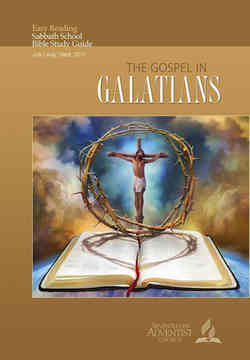

The Protestant world is getting ready to celebrate the 500th anniversary of the Protestant Reformation, when Martin Luther — guided by the Holy Spirit — brought to millions crucial biblical truths that were long hidden under centuries of superstition and tradition. One could argue that out of the pages of Galatians (along with Romans) Protestantism itself was born half a millennium ago! It was while reading Galatians that Martin Luther first was touched with the glorious good news of righteousness by faith, the great truth that spawned the Protestant Reformation, which freed millions from centuries of theological and ecclesiastical error. What he read in this book changed Luther, and the world has never been the same again.
Seventh-day Adventists, many centuries after Luther, also are indebted to Galatians. Through the study of Galatians, E. J. Waggoner and A. T. Jones helped the Adventist Church in the 1880s and 90s rediscover the truth of righteousness by faith.
What is it about Galatians that has made it such a backbone of the Protestant Reformation? Why has it been able to touch the hearts of so many, such as Martin Luther? In a manner unlike any other book in the Bible, Galatians addresses a number of themes crucial to the Christian soul. It is in Galatians that Paul tackles issues such as freedom, the role of the law in salvation, our condition in Christ, and the nature of the Spirit-led life, as well as the age-old question, How can sinful humans be made right before a holy and just God? It was this question, perhaps more than any other, that spurred Martin Luther on the track he started and from which he never turned back.
Of course, other books, such as Romans, address some of these same questions, but Galatians is different. Not only is it more succinct, but its rich themes are written in a powerfully personal and impassioned pastoral tone that can’t help but touch hearts open to the Spirit of God, even today.
Although Paul’s letter speaks to us personally, our understanding can be strengthened if we are aware of the original historical situation that Paul, under the guidance of the Holy Spirit, was addressing.
Many scholars believe that Galatians may be the earliest of Paul’s letters. It was written in A.D. 49, shortly after the famous Jerusalem Council (Acts 15). Therefore, the book may be the oldest Christian document known. As Acts and Galatians make clear, the early church found itself in a fierce battle over the nature of salvation, especially in the case of Gentiles. According to a group of Jewish believers, known as Judaizers, belief in Jesus alone was not good enough for Gentiles. Gentiles must also be circumcised and follow the laws of Moses (Acts 15:1). It is no surprise, then, that when Paul founded a church of Gentiles in Galatia, some of these Judaizers traveled there to “straighten things out.”
When word of this problem reached Paul, he reacted fervently. Recognizing that this false gospel of salvation by faith and works threatened to undermine the work of Christ, Paul wrote the Galatians an impassioned defense of the gospel. In the strongest of words, he identified this false teaching for what it really was — legalism, pure and simple.
This quarter’s Bible study guide invites us to journey with the apostle Paul as he pleads with the Galatians to remain true to Jesus. At the same time, it also gives us a chance to reflect on our own understanding of the truths that opened the way for Martin Luther’s ultimate break with Rome and the restoration of the biblical gospel.
Carl Cosaert, PhD, is a professor of biblical studies at Walla Walla University in College Place, Washington.

Lesson 1June 24-30

Paul: Apostle to the Gentiles

Sabbath Afternoon
Read for This Week’s Study: Acts 6:9-159:1-91 Sam. 16:7Matt. 7:1Acts 11:19-2115:1-5.
Memory Text: “When they heard these things they became silent; and they glorified God, saying, ‘Then God has also granted to the Gentiles repentance to life’” (Acts 11:18, NKJV).
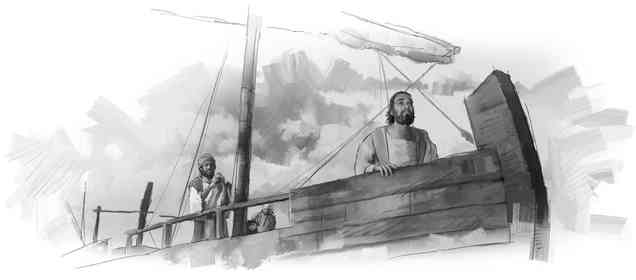
It’s not that hard to understand Saul of Tarsus (also known as the apostle Paul after his conversion), and why he did what he did. As a devout Jew who was taught all his life about the importance of the law and about the soon-coming political redemption of Israel, the idea of the long-awaited Messiah being ignominiously executed like the worst of criminals was just too much for him to tolerate.
No wonder, then, he was convinced that the followers of Jesus were being disloyal to the Torah and, thus, hindering God’s plan for Israel. Their claims that the crucified Jesus was the Messiah and that He had risen from the dead were, he believed, rank apostasy. There could be no tolerance for such nonsense or for anyone who refused to give up those notions. Saul was determined to be God’s agent to rid Israel of these beliefs. Hence, he first appears in the pages of Scripture as a violent persecutor of his fellow Jews, those who believed that Jesus was the Messiah.
God, however, had far different plans for Saul, plans that he never could have anticipated for himself: not only was this Jew going to preach Jesus as the Messiah, he was going to do it among the Gentiles!
Study this week’s lesson to prepare for Sabbath, July 1.
SundayJune 25

Persecutor of Christians

Saul of Tarsus first appears in Acts as one involved in the stoning of Stephen (Acts 7:58) and then in connection with the more wide-scale persecution that broke out in Jerusalem (Acts 8:1-5). Peter, Stephen, Philip, and Paul play a significant role in the book of Acts because they were involved in events that led to the spread of the Christian faith beyond the Jewish world. Stephen is of particular significance because his preaching and martyrdom appear to have had a profound influence on Saul of Tarsus.
Stephen himself was a Greek-speaking Jew, and one of the original seven deacons (Acts 6:3-6). According to Acts, a group of Greek-speaking Jews who had come to live in Jerusalem (Acts 6:9entered into a dispute with Stephen over the content of his preaching about Jesus. It is possible, maybe even likely, that Saul of Tarsus was involved in these debates.
Read Acts 6:9-15. What charges were brought against Stephen? What do these charges remind you of? (See also Matt. 26:59-61.)

The fierce hostility toward Stephen’s preaching appears to have resulted from two different things. On the one hand, Stephen drew the ire of his opponents by not placing primary importance on the Jewish law and the temple, which had become the focal point of Judaism and were treasured symbols of religious and national identity. But Stephen did more than merely downplay these two treasured icons; he vigorously proclaimed that Jesus, the crucified and risen Messiah, was the true center of the Jewish faith.
No wonder, then, that he angered the Pharisee Saul
(Phil. 3:3-6 ). The Pharisees were a Jewish religious group that followed Jewish laws very strictly. Saul saw that the great prophetic promises of God’s kingdom had not yet been fulfilled (Daniel 2, Zech. 8:23, Isaiah 40-55), and he probably believed it was his task to help God bring that day about — which could be done by cleansing Israel of religious corruption, including the idea that this Jesus was the Messiah.
Convinced he was right, Saul was willing to put those whom he thought wrong to death. While we need zeal and fervor for what we believe, how do we learn to temper our zeal with the realization that, at times, we just might be wrong?
MondayJune 26

Saul’s Conversion

“And he said, ‘Who are You, Lord?’ Then the Lord said, ‘I am Jesus, whom you are persecuting. It is hard for you to kick against the goads’ ” (Acts 9:5, NKJV).
Although Saul’s persecution of the early church begins rather inconspicuously (as he only holds the coats of Stephen’s executioners), it quickly intensifies (see Acts 8:1-39:1213142122:3-5). Several of the words Luke uses to describe Saul paint a picture of a wild, ferocious beast or a pillaging soldier bent on the destruction of his opponent. The word translated “ravaging” in Acts 8:3 (ESV), for example, is used in the Greek translation of the Old Testament (Ps. 80:13to describe the uncontrolled and destructive behavior of a wild boar. Saul’s crusade against the Christians was clearly not a half-hearted matter of convenience; it was a deliberate and sustained plan to exterminate the Christian faith.
Look at the three descriptions of Saul’s conversion (Acts 9:1-1822:6-21, and 26:12-19). What role did the grace of God have in this experience? In other words, how much did Saul deserve the goodness that the Lord showed toward him?

Saul’s conversion, from a human perspective, must have seemed impossible (hence the skepticism that many expressed when they first heard about it).
The only thing Saul deserved was punishment, but God extended grace to this fervent Jew instead. It is important to note, however, that Saul’s conversion did not happen in a vacuum, nor was it forced.
Saul was no atheist. He was a religious man, though gravely mistaken in his understanding of God. Jesus’ words to Saul, “ ‘ “It is hard for you to kick against the goads” ’ ” (Acts 26:14, ESV), indicate that the Spirit had been convicting Saul. In the ancient world, a “goad” was a stick with a sharp point used to prod oxen whenever they resisted plowing. Saul had resisted God’s prodding for some time, but finally on his way to Damascus, through a miraculous encounter with the risen Jesus, Saul chose to fight no longer.
Think back about your own conversion experience. Maybe it wasn’t as dramatic as Saul’s (most aren’t), but in what similar ways were you the recipient of God’s grace? Why is it important never to forget what we have been given in Christ?
TuesdayJune 27

Saul in Damascus

During Saul’s encounter with Jesus, he was blinded and then instructed to go to the house of a man named Judas and to wait there for another man, Ananias. No doubt Saul’s physical blindness was a powerful reminder of the greater spiritual blindness that led him to persecute the followers of Jesus.
The appearance of Jesus to him on the Damascus road changed everything. Where Saul had thought he had been so right, he had been dead wrong. Rather than working for God, he had been working against Him. Saul entered Damascus a different man than the proud and zealous Pharisee who had left Jerusalem. Instead of eating and drinking, Saul spent his first three days in Damascus in fasting and prayer as he reflected on all that had happened.
Read Acts 9:10-14. Imagine what must have been going on in the mind of Ananias: not only was Saul, the persecutor, now a believer in Jesus, he was also Paul, God’s chosen apostle to take the gospel to the Gentile world (see Acts 26:16-18).
No wonder Ananias was a little confused. If the church in Jerusalem was hesitant to accept Paul some three years after his conversion (Acts 9:26-30), one can imagine what questions and concerns filled the hearts of the believers in Damascus only days after the event!
Notice, too, that Ananias was given a vision by the Lord telling him the surprising and unexpected news about Saul of Tarsus; anything less than a vision might not have convinced him that what he was told about Saul was true — that the enemy of the Jewish believers had now become one of them.
Saul had left Jerusalem with the authority and commission of the chief priests to root out the Christian faith (Acts 26:12); God had, however, a vastly different commission for Saul, one that rested on far greater authority. Saul was to take the gospel to the Gentile world, an idea that must have been even more shocking to Ananias and the other Jewish believers than was the conversion of Saul himself.
Where Saul had sought to curtail the spread of the Christian faith, now God would use him to spread it far beyond anything that Jewish believers ever would have imagined.
Read 1 Samuel 16:7Matthew 7:1, and 1 Corinthians 4:5. What is the message of these texts in regard to why we must be careful in how we view the spiritual experience of other people? What mistakes have you made in your judgments about others, and what have you learned from those mistakes?

WednesdayJune 28

The Gospel Goes to the Gentiles

Where was the first Gentile church established? What events caused the believers to go there? (Acts 11:19-2126). What does that remind you of from Old Testament times? (See Daniel 2.)

The persecution that broke out in Jerusalem after Stephen’s death caused a number of Jewish believers to flee three hundred miles north to Antioch. As capital of the Roman province of Syria, Antioch was second only to Rome and Alexandria in significance. Its population, estimated at five hundred thousand, was extremely cosmopolitan, making it an ideal location not only for a church with
large numbers of both Jews and Gentiles but as the starting base for the worldwide mission of the early church.
What occurred in Antioch that resulted in Barnabas’ visit to the city and his subsequent decision to invite Paul to join him in Antioch? What kind of picture is presented of the church there? (Acts 11:20-26).

Constructing a chronology of Paul’s life is difficult, but it appears that some five years passed between his post-conversion visit to Jerusalem (Acts 9:26-30) and the invitation by Barnabas to join him in Antioch. What was Paul doing all those years? It is hard to say for sure. But based on his comments in Galatians 1:21, he may have been preaching the gospel in the regions of Syria and Cilicia. Some have suggested that, perhaps, it was during this time that he was disinherited by his family (Phil. 3:8) and suffered a number of the hardships he describes in 2 Corinthians 11:23-28. The church in Antioch blossomed under the guidance of the Spirit. The description in Acts 13:1 indicates that the cosmopolitan nature of the city was soon reflected in the ethnic and cultural diversity of the church itself. (Barnabas was from Cyprus, Lucius from Cyrene, Paul from Cilicia, Simeon presumably from Africa, and consider all the Gentile converts, too.) The Spirit now sought to take the gospel to even more Gentiles by using Antioch as the base for more far-reaching missionary activities, beyond Syria and Judea.
Read again Acts 11:19-26. What can we learn from the church at Antioch, a very culturally and ethnically diverse church, that could help churches today emulate the good that existed there?
ThursdayJune 29

Conflict Within the Church

Of course, nothing human is perfect, and it wasn’t long before trouble began within the early community of faith.
For starters, not everyone was pleased with the entry of Gentile believers into the early church. The disagreement was not over the concept of a Gentile mission, but over the basis on which Gentiles should be allowed to join. Some felt that faith in Jesus alone was not sufficient as the defining mark of the Christian; faith, they argued, must be supplemented with circumcision and obedience to the law of Moses. To be a true Christian, they asserted, Gentiles needed to be circumcised. (We can, in Acts 10:1-11:18, see the extent of the division between Jews and Gentiles through Peter’s experience with Cornelius and the reaction that followed.)
The official visits from Jerusalem, which monitored Philip’s work among the Samaritans (Acts 8:14) and the work with Gentiles in Antioch (Acts 11:22), may suggest some concern about the inclusion of non-Jews in the Christian community. Yet, the reaction to Peter’s baptism of Cornelius, an uncircumcised Roman soldier, is a clear example of the disagreement that existed on the Gentile question among the earlier believers. The inclusion of an occasional Gentile such as Cornelius may have made some feel uncomfortable, but Paul’s intentional efforts to open wide the doors of the church for Gentiles on the basis of faith in Jesus alone resulted in deliberate attempts by some to undermine Paul’s ministry.
How did certain believers from Judea try to counteract Paul’s work with Gentile Christians in Antioch? Acts 15:1-5.

Although the Jerusalem Council, in Acts 15, ultimately sided with Paul on the issue of circumcision, the opposition to Paul’s ministry continued. About seven years later, during Paul’s final visit to Jerusalem, many were still suspicious about Paul’s gospel. In fact, when Paul visited the temple, he nearly lost his life when Jews from Asia cried out, “Men of Israel, help: This is the man, that teacheth all men every where against the people, and the law, and this place” (Acts 21:28; see also 21:20, 21).
Put yourself in the position of these Jewish believers who were concerned about Paul’s teaching. Why do their concern and opposition make some sense? What can we learn from this about how our own preconceived ideas, as well as cultural (and even religious) notions, can lead us astray? How can we learn to protect ourselves from making the same kind of errors, no matter how well-intentioned we are?
FridayJune 30
Further Thought: For the relationship between personal conversion and the church, read Ellen G. White, “Individual Independence”, pp. 430-434, in Testimonies for the Church, vol. 3. For a helpful map of the early life of Paul and commentary on his conversion, see The SDA Bible Commentary, vol. 6, pp. 226-234.
“Paul had formerly been known as a zealous defender of the Jewish religion and an untiring persecutor of the followers of Jesus. Courageous, independent, persevering, his talents and training would have enabled him to serve in almost any capacity. He could reason with extraordinary clearness, and by his withering sarcasm could place an opponent in no enviable light. And now the Jews saw this young man of unusual promise united with those whom he formerly persecuted, and fearlessly preaching in the name of Jesus.
“A general slain in battle is lost to his army, but his death gives no additional strength to the enemy. But when a man of prominence joins the opposing force, not only are his services lost, but those to whom he joins himself gain a decided advantage. Saul of Tarsus, on his way to Damascus, might easily have been struck dead by the Lord, and much strength would have been withdrawn from the persecuting power. But God in His providence not only spared Saul’s life, but converted him, thus transferring a champion from the side of the enemy to the side of Christ. An eloquent speaker and a severe critic, Paul, with his stern purpose and undaunted courage, possessed the very qualifications needed in the early church.” — Ellen G. White, The Acts of the Apostles, p. 124.

Discussion Questions:

  1. What lesson can we learn from the fact that some of Paul’s harshest opponents were fellow Jews who believed in Jesus?
  2. How can you stand up for matters of religious principle and at the same time make sure that you are not fighting against God?
Summary: Saul’s encounter with the risen Jesus on the Damascus road was the defining moment in his life and in the history of the early church. God changed the one-time persecutor of the church and made him His chosen apostle to bring the gospel to the Gentile world. Paul’s inclusion of Gentiles in the church by faith alone, however, proved a difficult concept for some within the church to accept — a powerful example of how preconceptions and prejudice can hinder our mission.
Inside Story~ 

Rescue in the River, Part 1

Benjamin Murmu was crippled by polio, but managed to get around with a cane. He was well known in the hills of Bihar, India-as a witch doctor, and later as a political leader. Then one day, God revealed Himself to Benjamin.
While riding his horse, Benjamin came to a river that he needed to cross. The river was swollen, and the current looked dangerous. Slowly Benjamin urged the horse into the swirling waters. The horse struggled to keep its head above water, but the swift current quickly swept horse and rider downstream.
Thrashing its legs, the horse tried to find a foothold, but the water was too deep. Benjamin couldn’t swim; his only hope for survival was to cling to the horse. His heart beat wildly as he tried to guide his horse toward shore, but the animal was helpless against the current. Fearing certain death, Benjamin cried out to God for the first time in his life. “God! If You are there, please help me! Help me!"
Suddenly Benjamin saw two men beside him in the water. Without a word they grabbed the horse and pulled both horse and rider to solid ground. Benjamin lay on the shore, trying to catch his breath. When he turned to thank the two men who had rescued him, they were gone. His eyes scanned the flat, treeless landscape in search of the men, but they had simply disappeared.
Slowly Benjamin realized that God had answered his prayer and sent angels to rescue him. That moment marked the turning point in his life. There on the riverbank, still shaking from his ordeal, Benjamin made up his mind to become a Christian.
Some time later Seventh-day Adventist evangelists held meetings in Benjamin’s village. Benjamin attended and accepted the truth that he learned there. He asked to be baptized at the end of the meetings.
But not everyone was happy to have the evangelists preach in their village. Several times people tried to disrupt the meetings, but their efforts were largely unsuccessful, and a number of new believers asked to be baptized.
On the day of the baptism the pastors encountered a crowd of drunken men along the road that led from the meeting place to the baptismal site. The men allowed the pastors to pass by, but then they blocked the road and didn’t allow the believers to pass.
Meanwhile the pastors waited for the new believers to arrive. But as time passed and no one came, the pastors grew concerned. They sang and prayed for some time, but still the new believers didn’t come. To be continued.

Produced by the General Conference Office of Adventist Mission.  email: info@adventistmission.org  website: www.adventistmission.org

Friday, June 9, 2017

Lesson 12 The Day of the Lord June 10 -16 2017

Lesson 12June 10-16

The Day of the Lord


Sabbath Afternoon
Read for This Week’s Study: 2 Pet. 3:12John 21:15-172 Pet. 3:3-13Ps. 90:4Matt. 24:43-512 Pet. 3:14-18.
Memory Text: “Since all these things are to be dissolved in this way, what sort of persons ought you to be in leading lives of holiness and godliness” (2 Peter 3:11, NRSV).
In ages past people who didn’t believe in God were seen as untrustworthy, even potentially dangerous. Why? The idea was simple: if they didn’t believe in God, then they didn’t believe in any future judgment in which they would have to answer before Him for their deeds. Without this incentive, people would have a greater tendency to do wrong.
Though such thinking is rather antiquated (and “politically incorrect”) today, one cannot deny the logic and reason behind it. Of course, many people don’t need the fear of a future judgment in order to do right. But at the same time, the prospect of answering to God could certainly help motivate correct behavior.
As we have seen, Peter was not afraid to warn about the judgment that evildoers would face before God, because the Bible is clear that such a judgment will come. In this context, Peter speaks unambiguously about the end of days, judgment, the second coming of Jesus, and the time that the “elements shall melt with fervent heat” (2 Pet. 3:10). Peter knew that we are all sinners, and thus, with such prospects before us, he asks: “What manner of persons ought you to be in holy conduct and godliness?” (2 Pet. 3:11, NKJV).
Study this week’s lesson to prepare for Sabbath, June 17.
SundayJune 11

The Line of Authority

Peter warned his readers about the kind of dangerous teachings the church would face. He cautioned against those who, while promising liberty, would lead people back into the bondage of sin, the opposite of the freedom that we have been promised in Christ.
Unfortunately, this wasn’t the only false teaching that would confront the church. Another dangerous one would come. However, before Peter gets to this specific warning, he says something else first.
“This second epistle, beloved, I now write unto you; in both which I stir up your pure minds by way of remembrance: That ye may be mindful of the words which were spoken before by the holy prophets, and of the commandment of us the apostles of the Lord and Saviour” (2 Pet. 3:12). What point is Peter making here about why his readers should listen to what he is writing? See also John 21:15-17.

In 2 Peter 3:12, Peter reminds them of the inspired words that had come before in the “holy prophets.” Thus, he was again pointing them back to the Bible, to the Old Testament. He was reminding them that they had the “sure word of prophecy” (2 Pet. 1:19). He wanted to be clear that their beliefs were grounded in the Word of God. Nothing in the New Testament justifies the idea that the Old Testament was no longer valid or of little importance. On the contrary, it is the testimony of the Old Testament that helps establish the validity of the New and the claims that Peter was making about Jesus.
But there’s more. Peter then asserts a clear line from the “holy prophets” of the Old Testament to his own authority as one of the “apostles of the Lord and Saviour.” He was clear about the calling that he received from the Lord to do what he was doing. No wonder he spoke with such conviction and certainty. He knew the source of his message.
Why must the Word of God, and not culture or our own judgment or reason, be the ultimate authority in our lives? (After all, why else would we keep the Seventh-day Sabbath other than because of the Word of God?)
MondayJune 12

The Scoffers

After seeking to make his readers “mindful of the words which were spoken before by the holy prophets, and of the commandment of us the apostles of the Lord and Saviour” (2 Pet. 3:2), Peter gets into his specific warning. Perhaps, knowing how dangerous this teaching would be, he sought to impress upon it the authority with which he was writing.
Read 2 Peter 3:34. What arguments will skeptics of Christ’s return advance?

There’s an important similarity between those who promoted false liberty and those who were expressing skepticism about the Second Coming. The first group walked “according to the flesh in the lust of uncleanness” (2 Pet. 2:10, NKJV); meanwhile, those who were denying the return of Christ were those who were “walking according to their own lusts” (2 Pet. 3:3, NKJV). (It’s not just a coincidence that sinful passions can lead to false teachings, is it?)
The scoffers, he warned, will ask the pointed question, “Where is the promise of his coming?” (2 Pet. 3:4). In doing so, they will challenge the long-standing belief of Christians that Jesus will return to this earth, and soon. After all, especially because he is talking about the last days, these scoffers will bring up the undeniable reality that many Christians have died, and things do indeed continue to go on as they always have.
On the surface, it’s not an unreasonable question. Even holy Enoch, Ellen G. White wrote, saw that the righteous and the wicked “would go to the dust together, and that this would be their end” (Patriarchs and Prophets, p. 85), and he was troubled by it. If even Enoch, who lived before the Flood, struggled with this question, how much more so those living during the thousands of years afterward, and even down to the “last days”?
And what about us today, as Seventh-day Adventists? Our very name promotes the idea of Christ’s second advent. And yet, He still has not come. And yes, we do face the scoffers, just as Peter had predicted we would.
In your own faith experience, how do you deal with the fact that Christ has not returned yet? Bring your answer to class on Sabbath.
TuesdayJune 13

A Thousand Years as a Day

In 2 Peter 3:8-10, how does Peter respond to the argument that the scoffers will bring? What does he say that even now can help us to understand why Christ has not yet returned?

Peter responds to the issue of the unchanging nature of the world. He reminds his listeners that it is not true that the world has continued unchanged since creation. (Notice how Peter goes right back to the Word of God as his source and authority.) There was a time of great wickedness, after which God destroyed the world with a Flood (2 Pet. 3:6). And indeed, the Flood brought about a great change to the world, one that remains with us today. Peter then says that the next destruction will be by fire, not water (2 Pet. 3:10).
Peter also wrote, “One day is with the Lord as a thousand years, and a thousand years as one day” (2 Pet. 3:8). In saying this, Peter may have been reflecting on the words of Psalm 90:4: “For a thousand years in thy sight are but as yesterday when it is past, and as a watch in the night.” In other words, our conception of time is not like God’s; so, we need to be careful in the judgments we make about time.
From a human perspective, there does seem to be a delay in the return of Christ. But we are looking at things only from our human perspective. From God’s perspective, there is no delay. In fact, Peter is saying that extra time has been granted because God is showing His patience. He does not wish that any should perish (2 Pet. 3:9). The extra time, then, has been allowed to provide opportunity for many to repent.
Yet, warns Peter, God’s patience should not be taken as an opportunity to postpone a decision about Jesus. The day of the Lord will come as unexpectedly as a thief in the night. A thief who comes at night probably expects to sneak away unnoticed. But while the day of the Lord will come like a thief, it will certainly be noticed. As Peter says, “the heavens shall pass away with a great noise, and the elements shall melt with fervent heat” (2 Pet. 3:10). Thus, Peter’s message is like Paul’s: “Behold, now is the accepted time; behold, now is the day of salvation” (2 Cor. 6:2).
WednesdayJune 14

So What?

A young man tried to witness to his mother. He told her about the death of Jesus and the promise of His return. He was fairly proud of himself, thinking that he had done quite an eloquent job. When he finished his mini-sermon about Jesus and the Second Coming, his mother looked at him and said: “So what does that have to do with me now?”
Read 2 Peter 3:11-13. How does Peter answer the question, “So what does that have to do with me now?” See Matt. 24:43-51.

As we have said, our very name Seventh-day Adventist reveals our belief in the reality of Christ’s return. The teaching is foundational; our whole Christian faith would become meaningless without the return of Christ and all that it promises.
But are we not in danger of becoming like the wicked servant in the parable of Matthew 24:43-51? We might not be doing the specific kind of evil depicted in the parable, but that’s not the point (it is, after all, a parable). Instead, what the parable warns about is that it could become easier to lower our standards, especially regarding how we treat others, and to become more like the world and less fervent in our belief in the Lord’s return.
Sure, now and then we do face those who, with their charts and prophetic calculations, claim to have the date for Christ’s return. But for the most part the danger facing Seventh-day Adventists is not that they are setting dates for Christ’s soon return. Rather, the danger is that as the years pass, the promise of the Second Coming starts to play a much smaller role in our thinking.
Yes, the longer we are here, the closer we get to the Second Coming. On the other hand, the longer we are here, the easier it is for us to imagine His return as so far away that it really doesn’t impact our daily life. Scripture warns against this kind of complacency. As Peter said, if Jesus is to return, and we are to face judgment, Christians should live lives of holiness and godliness (2 Pet. 3:11). The reality of the Second Coming, whenever it happens, should impact how we live now.
How much does the reality of the Second Coming affect you in your daily life and thinking? What, if anything, does your answer say to you about your life and faith?
ThursdayJune 15

A Final Appeal

Peter ends his epistle with a theme that has pervaded it from the start: living holy lives and being careful not to be led astray by “the error of the wicked” (2 Pet. 3:17).
Read 2 Peter 3:14-18. To whom is Peter appealing, and what is he warning about in this appeal?

How interesting that Peter ends his epistle with an appeal to the writings of “our beloved brother Paul” (2 Pet. 3:15). Paul also wrote of the need to live at peace while waiting for the second coming of Jesus, and to use the time to develop holy lives (see Rom. 2:4Rom. 12:18Phil. 2:12).
Also notice the way that Peter’s reference to the writings of Paul shows that Paul’s writings were highly valued early in Christian history. Whether or not Peter is referring to the whole collection of Paul’s writings now found in the New Testament, or only a subset of them, cannot be determined. Nevertheless, Peter’s comments show that Paul’s letters were highly regarded.
Finally, Peter comments that Paul’s writings can be misconstrued, just like other Scriptures. The Greek word grapha literally means “writings,” but in this context it clearly means “sacred writings,” such as the books of Moses and the prophets. Here is very early evidence that Paul’s writings had taken on authority, like the authority of the Hebrew Bible.
And considering what we read earlier about false teachers who promise liberty, it’s not hard to imagine people using Paul’s writings about liberty and grace as an excuse for sinful behavior. Paul strongly emphasized righteousness by faith alone (Rom. 3:2122), but nothing in his writings gives people a license for sin (see Rom. 6:1-14). Paul himself had to deal with this error in regard to what he had been preaching and teaching about righteousness by faith. Yet, Peter warns, those who twist his writings do so at the risk of “their own destruction” (2 Pet. 3:16).
What are choices you can make right now that can help you to live the kind of life that we have been called to live in Christ Jesus?
FridayJune 16
Further Thought: From our perspective, it can seem as if the Second Coming is greatly delayed. Jesus obviously knew that we would feel this way, and in some parables He warned against what could happen if we weren’t careful and watchful during this time. Take the parable of the two servants in Matthew 24:45-51 (mentioned in Wednesday’s study). They both expected their master to return. But they reached two different conclusions about his return. One decided he must be ready for the master to return at any time. The other said that the master was delayed, and therefore he took it as an opportunity to act in an evil manner. “Because we know not the exact time of His coming, we are commanded to watch. ‘Blessed are those servants, whom the Lord when He cometh shall find watching.’ Luke 12:37. Those who watch for the Lord’s coming are not waiting in idle expectancy. The expectation of Christ’s coming is to make men fear the Lord, and fear His judgments upon transgression. It is to awaken them to the great sin of rejecting His offers of mercy. Those who are watching for the Lord are purifying their souls by obedience to the truth.” - Ellen G. White, The Desire of Ages, p. 634.

Discussion Questions:

  1. In class, discuss your answer to Monday’s question about the Second Coming. What are some ways in which we deal with the fact that Christ has not yet returned? What can we learn from one another’s answers?
  2. What teachings, practices, and beliefs do we hold as Seventh-day Adventists that do not come from culture or reason or tradition but are solely from the Word of God?
  3. As we saw during the week, Peter linked sinful tendencies and passions with false teaching. The lesson had this statement: “It’s not just a coincidence that sinful passions can lead to false teachings, is it?” Why is it not just a coincidence? What could be the various links between the two?
  4. Albert Einstein presented to the world the amazing idea that time is not absolute. That is, depending on where you are and how fast you are moving, time in your frame of reference will be different from someone else’s in another frame of reference. The point is, time is something very mysterious, and it acts in ways that we don’t fully understand. How might this idea help us to realize that time for God is not the same as it is for us, especially in the context of Christ’s having not yet returned?
Inside Story~ 

Mother of Many—Part 2

Every week we talked about God and read from the Bible. We prayed together, and then we ate. At first I think they listened just to be polite and get a hot meal, but as time went by they became more interested in what I was trying to teach them.
Soon the boys were treating me like a mother, confiding in me and trusting me. Some of them told me about their desire to get rid of their drug habits or about things they had stolen. I listened and counseled them about how to live a happy, honest life instead. I told them about the joys of hard work and honest labor. I told them about people in the Bible and how they resisted temptation and followed God’s plan, often changing the world around them. The boys listened and were inspired to trust God to change them. I encouraged the ones who had parents to return home to their families. It took a lot of talking, but eventually some decided to go home.
One boy, Pierre, had run away from home when he was only 7 years old. He had lost some money he was supposed to take to his mother, and he was afraid of being punished. So he ran away. Eventually he arrived in the capital city, where he lived on the streets for the next eight years. After I told him the story of the prodigal son, Pierre agreed to return home. But he was afraid to go by himself. So I agreed to go with him.
We went to the bus station together and bought tickets to his hometown. When we arrived, we walked down almost forgotten streets until he found his house. His mother stared at the tall young man standing in front of her, unable to tell that this was the little boy she had lost so long ago. She thought her son was dead. She stared at Pierre for a long minute. When her mind at last grasped whom she was seeing, she threw her arms around him and hugged him tightly, weeping for joy. Then she began calling her neighbors to see her son, who had been lost but had come home. That night there was joy in one home over a lost child who had returned.
I stayed in Pierre’s town overnight so I could take him to visit the local pastor. I explained that Pierre had recently accepted Jesus as his Savior and returned to his mother’s house. He would need lots of nurturing.
To be continued.

Produced by the General Conference Office of Adventist Mission.  email: info@adventistmission.org  website: www.adventistmission.org
Friday, June 2, 2017

Lesson 11 False Teachers June 3-9 2017

Lesson 11June 3-9

False Teachers


Sabbath Afternoon
Read for This Week’s Study: 2 Pet. 2:1-22John 8:34-36Matt. 12:43-45Jude 4-19Gen. 18:16-33.
Memory Text: “They promise them freedom, but they themselves are slaves of corruption; for people are slaves to whatever masters them” (2 Peter 2:19, NRSV).
In his first epistle, Peter, with great pastoral concern, sought to encourage readers in regard to the perils of persecution. Though we don’t know exactly what form of persecution he was specifically addressing, we do know that the church would face terrible trials as the pagan Roman Empire sought to extinguish the growing movement of people called “Christians.”
But Satan launched a two-pronged attack. Certainly, persecution from the outside-that is, brute force and violence-was a powerful tool. But the church faced another threat, one perhaps even more dangerous than outside persecution. And that was the threat from inside. Just as the Jewish nation in the past had to deal with false prophets, the follower of Jesus in Peter’s day had to deal with false teachers who would “secretly introduce destructive heresies” (2 Pet. 2:1, NIV) into the church itself. And, even worse, Peter warned that many would follow these “destructive ways” (2 Pet. 2:2, NKJV).
What were some of these teachings that Peter was warning about? How did Peter react to them, and what lessons can we take from his warnings for ourselves today, as we also face threats from within?
Study this week’s lesson to prepare for Sabbath, June 10.
SundayJune 4

False Prophets and Teachers

It’s sometimes easy to idealize the early church, to think of it as a time of great peace and harmony among the earliest believers in Jesus. That would be a mistake. Even from the days of Jesus the church faced struggles, often from within (think of Judas). As the New Testament epistles show, many of the problems came from false teachings in their midst. The early church struggled not just with persecution from the outside but from problems within, as well. In this letter Peter deals with some of those internal challenges. What are they? “But there were also false prophets among the people, even as there will be false teachers among you, who will secretly bring in destructive heresies, even denying the Lord who bought them, and bring on themselves swift destruction. And many will follow their destructive ways, because of whom the way of truth will be blasphemed. By covetousness they will exploit you with deceptive words; for a long time their judgment has not been idle, and their destruction does not slumber” (2 Pet. 2:1-3, NKJV). It hardly sounds like a time of great peace and internal harmony among the brothers and sisters, does it?
Read 2 Peter 2:1-310-22. What is Peter warning about here? What are some of the false things that were being promoted in the churches?

Second Peter 2:1 most likely reveals the reason the Lord inspired Peter to write the letter. He was warning them that just as there had been false prophets in the past, there will be false teachers in the future. Peter outlines quite a litany of charges against these teachers, everything from “destructive heresies” (2 Pet. 2:1, NKJV) to leading the unwary into bondage (2 Pet. 2:19) and a host of other errors, as well. From what he wrote, we can see that these were indeed very dangerous teachings, which explains why he reacted so strongly against them. Peter knew nothing of the idea that doctrine doesn’t matter.
Look at how strongly Peter reacts to these false teachings. What should this tell us about how important truth is? How can we protect ourselves against any and all attempts to bring false doctrine into the church?
MondayJune 5

Freedom in Christ?

“For they mouth empty, boastful words and, by appealing to the lustful desires of the flesh, they entice people who are just escaping from those who live in error” (2 Pet. 2:18, NIV). What is Peter warning about in this verse? What does he say in 2 Peter 2:19 that helps explain his concern? What is the importance of the word “freedom” (NIV) or “liberty” (NKJV) in verse 19?

In the strongest possible language, Peter was giving his readers a warning against the dangers of false teachers. In 2 Peter 2:18-21 he warned that these false teachers, while promising liberty and freedom, would actually lead people into bondage.
What a complete perversion of the gospel! Freedom in Christ should mean freedom from the slavery of sin (Rom. 6:4-6). Any concept of freedom in Christ that leaves a person in the bondage of sin is the kind of error that Peter is warning about. Though scholars have debated the precise heresy that he was dealing with here, it’s clearly linked to the whole question of sin and one’s being a slave to it.
Read John 8:34-36. How do Christ’s words here help us to understand what Peter is saying?

Whatever these false teachers were presenting, they were leading their victims-people who had recently found the Lord Jesus-back to their old sinful way of life. It’s easy to imagine some kind of cheap grace gospel that downplayed the need for purity and holiness, something that caused them to be caught up again in the very “corruption” (2 Pet. 2:19) of the world they had just escaped from. No wonder Peter spoke so sharply and strongly against these teachings and warned about what the result of following them would be.
What do you understand freedom in Christ to be? What has Christ freed you from?
TuesdayJune 6

A Dog Returns to Its Vomit

Read 2 Peter 2:17-22 and Matthew 12:43-45. What are the dangers when a convert to Christianity returns to his/her former lifestyle?

Peter was particularly concerned about the fate of those whom the false teachers entice back into their former sins (2 Pet. 2:18). The false teachers promise freedom, but as Peter points out, the freedom that they promise is radically different from the kind of freedom that Jesus promised those who followed Him.
Look at the powerful warning Peter gave. It would have been better never to have “known the way of righteousness” (2 Pet. 2:21) than to have known it and then turned back to their old ways.
Of course, this doesn’t mean their case is hopeless. We all know stories of those who have turned away from the Lord and later have come back. And we know that the Lord is very glad when they do, and happy to take them back. (See Luke 15:11-32.) It means only that turning away is a very dangerous course to take, nor is it a pleasant one, either. A dog returning to its own vomit is a crude and harsh way to describe it, but Peter makes his point with that image.
Perhaps the echo of the words of Jesus in 2 Peter 2:20 is intentional (see Matt. 12:45Luke 11:26). Jesus tells the parable of a man who has been freed from an unclean spirit. The spirit wanders without a place of his own, and then returns to see “‘my house from which I came’” (Matt. 12:44, NKJV). He arrives and finds it empty and put in order. He then moves back in, but he brings with him several other spirits more wicked than himself. As Jesus says, “‘the last state of that man is worse than the first’” (Matt. 12:45, NKJV). The danger Jesus illustrates and Peter describes is real. The new believer needs to ensure that the things of the Spirit replace the things that used to dominate his or her life. If involvement in church and the sharing of the new faith does not replace the earlier secular activities, it is too easy to revert to one’s old ways.
What are ways we as a church family can better nurture and disciple all our members, especially newer ones?
WednesdayJune 7

Peter and Jude

Many people have observed that Jude 4-19 largely repeats the message of 2 Peter 2:1-3:7. Whenever Scripture repeats a message, we should be aware that God wants to convey something important. In these similar passages, Peter and Jude take great lengths to notify us of an important truth: God is in control of the destinies of the wicked. Both Peter and Jude leave us with no doubt that God is closely monitoring evil. Whether unrighteous humanity or the fallen angels, God has taken special note of their evil and has planned their punishment on the day of judgment (2 Pet. 2:917Jude 6).
Read 2 Peter 2:1-3:7 and Jude 4-19. What examples of God’s earlier vengeance do Peter and Jude give to punctuate the fact that God means business in dealing with sin?

Peter and Jude record three examples of God’s vengeance in the past. They include the destruction of the antediluvian world by the Flood, the incineration of Sodom and Gomorrah, and the chaining of angelic beings for destruction (2 Pet. 2:4-63:7Jude 67). All of these episodes are laced with a lingering sense of finality. Though Scripture speaks a great deal about God’s mercy and grace, God’s justice also plays an important role in the final destruction of sin.
What were the sins that engendered such severe punishment? They include introducing destructive heresies; despising authority; enslavement to whatever has mastered them; perverting the grace of God into a license for immorality; denying Jesus Christ as the only Sovereign and Lord; polluters of their own bodies; speakers of empty, boastful words; and slanderers (2 Pet. 2:11019Jude 4Jude 82 Pet. 2:18Jude 10, NIV).
Interestingly, these descriptions do not include violent acts and other wicked atrocities that often outrage us. Instead, they describe more subtle sins that have one commonality. They are sins that are sometimes excused within the church community itself. This fact should awaken us to the great need for sincere repentance and reformation in the church.
Read 2 Peter 2:12 and Jude 10. Here Peter and Jude describe those who are facing destruction as having degraded into “unreasoning” (2 Pet. 2:12, NIV) or “irrational” animals (Jude 10, NIV) ruled by instinct. How does that description compare to how God originally created humanity, and how can you prevent that from happening in your life?
ThursdayJune 8

More Old Testament Lessons

Read 2 Peter 2:6-16. What other examples does Peter use to give his warning about what wickedness will lead to?

The first substantive reference to Sodom in the Bible is Genesis 13:1213. Lot and Abraham decided to separate for “financial” reasons. Lot chose the Jordan valley, and “pitched his tent toward Sodom” (Gen. 13:12). The Bible then comments, “Now the people of Sodom were wicked, great sinners against the LORD” (Gen. 13:13, NRSV). Later, when God warned Abraham that He was planning to destroy Sodom, Abraham negotiated an agreement that God would not destroy it if 10 righteous people were found there (Gen. 18:16-33). The unlikelihood of finding even 10 righteous people in Sodom was amply demonstrated by what happened to the messengers sent to visit Lot. The city was duly destroyed; only Lot and his two daughters escaped (Gen. 19:12-25).
Peter derives two lessons from this story. First, the two cities provide an example of the punishment coming to the ungodly (2 Pet. 2:6). Second, it shows that the Lord knows how to rescue the righteous from trial (2 Pet. 2:7-9). Peter then notes some of the characteristics of those who were destroyed at Sodom and Gomorrah: they indulge their flesh in depraved lust, despise authority, are bold and willful, and do not hesitate to slander the angels (2 Pet. 2:1011). These characteristics have similarities to how Peter describes the false teachers and their followers.
The story of Balaam is found in Numbers 22:1-24:25. He had been hired by Balak, king of Moab, to curse the Israelites. At first reluctant, he was eventually persuaded to take on this task by the offer of a larger sum of money (Num. 22:7-21). On his way he was confronted by an “angel of the LORD” and was saved from death only when his donkey turned aside. Balaam then beat his donkey and realized his mistake only when his eyes were opened, and he saw the “angel of the LORD” himself (Num. 22:22-35). In the end, Balaam ended up blessing Israel (Num. 23:4-24:24). Peter used Balaam as an example of those enticed by adultery and greed (2 Pet. 2:1415). Such people are like Balaam. They have left the path that they should follow.
Think about all that we have been given, both in the Bible and in the writings of Ellen G. White. Thus, why can we as Seventh-day Adventists never say that we haven’t been warned?
FridayJune 9
Further Thought: So often we hear Christians talk about “freedom in Christ.” And, of course, this is a valid concept. To be free from the condemnation of the law and to have assurance of salvation because of what Christ has done for us and not from our own works is indeed to be free. The story of Martin Luther and the bondage from which he suffered before he understood grace is a great example of what this freedom can mean. However, as we saw in Peter, the wonderful truth can be twisted. “The great truth of our entire dependence upon Christ for salvation lies close to the error of presumption. Freedom in Christ is by thousands mistaken for lawlessness; and because Christ came to release us from the condemnation of the law, many declare that the law itself is done away, and that those who keep it are fallen from grace. And thus, as truth and error appear so near akin, minds that are not guided by the Holy Spirit will be led to accept the error and, in so doing, place themselves under the power of Satan’s deceptions. In thus leading people to receive error for truth, Satan is working to secure the homage of the Protestant world.” - Ellen G. White, Christ Triumphant, p. 324.

Discussion Questions:

  1. Meditate on 2 Peter 2:19 and the other things Peter says about the results of the false teaching. Why must we be sure to learn for ourselves the crucial truths we believe? How important is it that we all agree exactly on what we should believe? When does it become “dangerous” to think ideas that are different from the rest of our fellow believers?
  2. Look at some of the strong language of Peter in regard to the whole question of punishment and judgment: “bring upon themselves swift destruction”
  3. (2 Pet. 2:1); “shall utterly perish in their own corruption” (2 Pet. 2:12); “to reserve the unjust unto the day of judgment to be punished” (2 Pet. 2:9); “and their destruction does not slumber” (2 Pet. 2:3, NKJV). What should these texts tell us about not only the reality of judgment but about how strongly God condemns those who will lead His people into error?
  4. What do you think it means when those who talk about “freedom in Christ” generally do so, not in the context of the law in general (though some do) but in the context of keeping the fourth commandment, the Sabbath commandment? How does this argument help us to see another way that the idea of “freedom in Christ” can be twisted?
Inside Story~ 

Mother of Many—Part 1

I’m a Bible worker, and my heart is in evangelism. One day God impressed me to work with an unusual group of people.
On my way to work I paused at the gate to the church office and glanced at the boys standing nearby. I knew that most of them were homeless, either by choice or by circumstances they couldn’t control. Some had run away from abusive homes or from unending poverty. I wondered if they missed their mothers. I turned and walked nervously over to them.
“Hello,” I greeted them with a smile.
They looked at me strangely, wondering what I was going to do next.
I knew that many of these boys were addicted to drugs and alcohol. And I was sure that they all were hungry. They needed a family, at least a mother, to look out for them and teach them right from wrong. God had impressed me to get to know these young boys and share His love with them. “I’m your mother,” I said bravely. “I’d like to get to know you.”
But the boys were shy, and I was nervous. I knew that even though they were young, they far outnumbered me and could easily steal my bag or hurt me if they wanted to. But I kept smiling and talking. I talked to them for a few minutes until we both felt more at ease. Then I invited them to come and sit under a tree with me so we could talk some more.
The boys hesitated, but eventually they came and sat down. I told them a little about myself, then I told them how God loves each one of them. They warmed up to me and began to tell me a little bit about themselves. I invited the boys to return the following week.
The next Monday I brought food with me. I knew that boys are always hungry, especially homeless boys who probably hadn’t had a home-cooked meal for a very long time. Most of them survived on handouts they received from begging and leftovers from the bakeries.
I made foo-foo (a starchy paste made from potato, plantain, or cassava) and some soup. When the boys arrived, they smelled the food, and I could see the smiles on their faces. They ate hungrily, and again we talked. Some boys even trusted me enough to tell me that fufu wasn’t one of their favorite foods and asked if I could make something different. I tried to vary the food each week to please everyone’s taste at least sometime. And the boys loved it.
To be continued.

Produced by the General Conference Office of Adventist Mission.  email: info@adventistmission.org  website: www.adventistmission.org