Thursday, October 8, 2015

Lesson 3 The Last Five Kings of Judah Oct 10-16 2015

Lesson 3October 10-16

The Last Five Kings of Judah

Sabbath Afternoon
Memory Text: He defended the cause of the poor and needy, and so all went well. Is that not what it means to know me?(Jeremiah 22:16, NIV).
Famed Russian writer Fyodor Dostoevsky spent four years in a Siberian prison in the 1800s for subversive political activities. Later, writing about his experiences, he talked about some of his fellow prisoners' utter lack of remorse for their terrible behavior.In the course of several years, I never saw a sign of repentance among these people; not a trace of despondent brooding over their crimes, and the majority of them inwardly considered themselves absolutely in the right.-Joseph Frank, Dostoevsky, the Years of Ordeal, 1850-1859, p. 95.
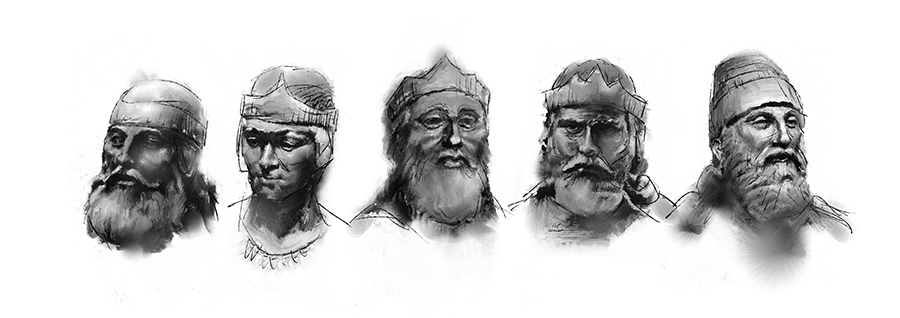
Dostoevsky could have been talking about, with the exception of Josiah, the five kings who ruled Judah during the ministry of Jeremiah. One after another, these men seemed totally unrepentant for their actions, even as it became clearer and clearer that their actions were bringing the calamities that the Lord, through Jeremiah, had warned would come.
It had never been God's intention to give Israel a king; by the end of this week's lesson, we will better understand why. We'll understand, too, the severe pressure that poor Jeremiah faced during much of his unappreciated ministry.
Study this week's lesson to prepare for Sabbath, October 17.
SundayOctober 11

Under the Rule of Josiah

Josiah was the sixteenth king to rule in the Southern Kingdom; his dates were 640-609 b.c. He became king at the age of eight, after more than half a century of moral and spiritual decline under his father (Amon) and grandfather (Manasseh), two of the most evil kings in Judah. Josiah's reign lasted for thirty-one years. Unlike his ancestors, however, Josiah did that which was right in the sight of the Lord (2 Kings 22:2), despite an environment that worked against him.
Born of a wicked king, beset with temptations to follow in his father's steps, and with few counselors to encourage him in the right way, Josiah nevertheless was true to the God of Israel. Warned by the errors of past generations, he chose to do right, instead of descending to the low level of sin and degradation to which his father and his grandfather had fallen. He 'turned not aside to the right hand or to the left.' As one who was to occupy a position of trust, he resolved to obey the instruction that had been given for the guidance of Israel's rulers, and his obedience made it possible for God to use him as a vessel unto honor.-Ellen G. White, Prophets and Kings, p. 384.
Read 2 Chronicles 34:1-33. What were the components of Josiah's reform, and why would they be central to any attempt at spiritual reformation, be it corporate or personal?

Josiah's reform consisted of two main components: First, it was getting rid, as much as possible, of anything and everything that smacked of idolatry. That is, he worked to remove the evil practices that had arisen in the nation.
But that was only the first step. An absence of evil or wrong practices doesn't automatically mean that good will follow. Second, after hearing the book of the law read to him, the king made a covenant before the Lord to keep his commandments, and his testimonies, and his statutes, with all his heart, and with all his soul, to perform the words of the covenant which are written in this book (2 Chron. 34:31).
Read 2 Chronicles 34:32-33. What do these verses tell us about the power of a good example, especially among people in positions of power and influence? Think long and hard: What influence do your words and actions exert on others?

MondayOctober 12

Jehoahaz and Jehoiakim: Another Descent

Jehoahaz (also known as Shallum) was 23 years old when he succeeded his father on the throne. His reign lasted only three months. Pharaoh replaced him with his brother because Jehoahaz was not favorable toward Egyptian politics. Jehoahaz was taken to Egypt, and there he died. (See 2 Chron. 36:42 Kings 23:31-34.)
The king that followed Jehoahaz was Jehoiakim, who reigned from 609-598 b.c. He was the son of Josiah. When Nebuchadnezzar took Jerusalem, Jehoiakim was taken to Babylon along with vessels from the temple. Jeremiah again warned the people that their new king was leading the nation down a wrong path.
Read Jeremiah 22:1-19. What were some of the issues with Jehoiakim that brought such a stern rebuke from the Lord?

The Lord, speaking through Jeremiah, had very sharp words for this corrupt and covetous ruler. Jehoiakim was an oppressive and greedy king who imposed heavy taxes in Judah (see 2 Kings 23:35) in order to pay the Egyptians. Worse, using forced labor, he had elaborate construction done on his own palace, in defiance of the Torah, which was clear about paying people for their work: Thou shalt not defraud thy neighbour, neither rob him: the wages of him that is hired shall not abide with thee all night until the morning(Lev. 19:13). Also, unlike Josiah, his father, Jehoiakim permitted pagan rites to flourish again in Judah.
Jeremiah 22:16 is a powerful text. In the context of comparing the corrupt Jehoiakim to his father, Josiah, the Lord said to him: He defended the cause of the poor and needy, and so all went well. Is that not what it means to know me? (NIV). In other words, the true knowledge of God comes from how one treats those who are in need; it comes when we step out of ourselves to benefit those who can really do nothing for us in return. We see here, again, as we see all through the Bible, the Lord's concern for the poor and the helpless, as well as the obligation we have to help those who cannot help themselves.
Dwell on the idea that helping the poor and the needy is how we come to know the Lord. What does that mean?

TuesdayOctober 13

The Short Reign of King Jehoiachin of Judah

The nineteenth king of Judah became Jehoiachin, son of Jehoiakim. He reigned on David's throne for barely three and a half months. In 598 b.c. Nebuchadnezzar brought his forces to Jerusalem and seized the 18-year-old king with his mother, his wives, and many other royal captives. In 561 b.c., in the thirty-seventh year of his captivity, Jehoiachin was given mercy by Evil-Merodach, Nebuchadnezzar's successor. He was granted the right to dine with the king of Babylon, and he could wear his kingly robes. (See 2 Kings 25:27-30Jer. 52:31-34.) His sons were also in Babylon with him, yet Jeremiah's prophecy said they would have to give up the throne of David.
Read Jeremiah 29:1-14, the words of the Lord through Jeremiah after King Jehoiachin and his family and the court were taken captive from Jerusalem. Even amid this tragedy, how is God's love and grace revealed?

One of the most famous verses in the Bible is this: 'For I know the plans I have for you,' declares the Lord, 'plans to prosper you and not to harm you, plans to give you hope and a future' (Jer. 29:11, NIV). Here, of course, we have the immediate context: that of the Lord speaking through Jeremiah to the captives of Judah who had seen their lives completely uprooted by their Babylonian conquerors. Yet, even then, no matter how bad their situation seemed, the Lord wanted them to know that He still loved them and had only their good in mind. No doubt, considering the horrific circumstances, they must have welcomed such promising and hopeful words. Thus, even amid all dire warnings and threats, the people were still given the promise of a future and hope. How crucial it must have been for them, especially at that time, to have such assurance!
A future and a hope? What promises can you claim from the Lord for a future and a hope even right now, regardless of your circumstances?

WednesdayOctober 14

At the End of the Dead End

Read 2 Chronicles 36:11-14. What do these verses tell us about the last king of Judah before the final destruction of the nation? What spiritual principles of apostasy are revealed in these texts?

Zedekiah (also known as Mattaniah) took the throne at the age of 21, placed there by Nebuchadnezzar as a puppet king. Unfortunately, as the texts say, he hadn't learned many lessons from what had gone before with previous kings, and as a result he brought even greater ruin to the nation.
Second Chronicles 36:14 states something very profound, a point that in many ways went to the heart of their apostasy. Amid the list of all the evil done under the reign of Zedekiah, it is said that Judah was following all the abominations of the nations (NKJV).
There they were, hundreds of years after the Exodus, hundreds of years as the covenant people who were to be a light and a beacon to the nations (Deut. 4:5-8), and yet they were still so caught up in the prevailing culture, so caught up in the cultural and religious environment of their neighbors, that they were doing all the abominations of the pagans.
Might there be a message there for us?
Read Jeremiah 38:14-18. What did the king ask him, and why?

The Lord had made it clear on numerous occasions that the nation was to submit to the rule of Babylon, that this conquest was punishment for their iniquity. Zedekiah, however, refused to listen, and he formed a military alliance against Nebuchadnezzar. Israel relied heavily on the hope of an Egyptian military victory. But Nebuchadnezzar was victorious over Pharaoh's army in 597 b.c. This defeat permanently sealed the fate of Jerusalem and the nation. Despite so many opportunities to repent, to reform, to be revived, Judah refused.
We as a church have been raised up to proclaim a message to the world that no one else in the world is proclaiming. In many ways that is very similar to what Judah was to do. What lessons can and should we learn for ourselves from their mistakes?
ThursdayOctober 15

The Dark Years

What became of Israel and Jerusalem after rejecting God's message? Jer. 39:8-9.

Everything that God had warned them would happen to them is exactly what happened. However much they didn't want to believe the warnings, they certainly did believe them after it all came to pass. Who hasn't, even on a personal level, experienced something similar? We're warned by the Lord not to do something or else this will happen, but we do it anyway and, sure enough, what we were told would happen happened.
What message is found in Jeremiah 23:2-8? What hope was given the people there?

From a human perspective, all seemed lost: their nation lay in ruins, their temple was destroyed, their rulers were exiled and held captive, and the city of Jerusalem was a pile of stones. The Jewish nation and the Jewish people should have at that time disappeared from history, as had so many other nations that had undergone what they just had.
The Lord, though, had other plans, and in the verses above (and in many others) He gave them the hope that all was not lost but that a remnant would remain and would return and through them the promises would be fulfilled. That is, amid all the warning of doom and destruction, the prophets also gave the people their only hope.
The dark years of destruction and death marking the end of the kingdom of Judah would have brought despair to the stoutest heart had it not been for the encouragements in the prophetic utterances of God's messengers. Through Jeremiah in Jerusalem, through Daniel in the court of Babylon, through Ezekiel on the banks of the Chebar, the Lord in mercy made clear His eternal purpose and gave assurance of His willingness to fulfill to His chosen people the promises recorded in the writings of Moses. That which He had said He would do for those who should prove true to Him, He would surely bring to pass. 'The word of God . . . liveth and abideth forever.' 1 Peter 1:23.-Ellen G. White, Prophets and Kings, p. 464.
FridayOctober 16
Further Thought: In the closing years of Judah's apostasy the exhortations of the prophets were seemingly of but little avail; and as the armies of the Chaldeans came for the third and last time to besiege Jerusalem, hope fled from every heart. Jeremiah predicted utter ruin; and it was because of his insistence on surrender that he had finally been thrown into prison. But God left not to hopeless despair the faithful remnant who were still in the city. Even while Jeremiah was kept under close surveillance by those who scorned his messages, there came to him fresh revelations concerning Heaven's willingness to forgive and to save, which have been an unfailing source of comfort to the church of God from that day to this.-Ellen G. White, Prophets and Kings, p. 466.
Look at the phrase, Heaven's willingness to forgive and to save. Think about all the ways that we have been shown Heaven's willingness to forgive and save. After all, the Cross alone should tell us about this willingness. We have the Word of God, which reveals to us the plan of salvation. We have been given the Spirit of Prophecy, a wonderful gift. What are other ways we have been shown Heaven's willingness to forgive and to save?

Discussion Questions:

  1. [The people approached] Jeremiah the prophet and said to him, 'Please hear our petition and pray to the Lord your God for this entire remnant. For as you now see, though we were once many, now only a few are left' (Jer. 42:2, NIV). What does this verse and what we read in Jeremiah 23:3 have to say about the remnant theme in Jeremiah?
  2. It's so easy from our perspective to look back at sacred history and see all the faults and shortcomings and spiritual deficiencies of God's people of antiquity. And we should, because we have been told that these stories were written as examples for us (1 Cor. 10:11). The sad thing is, many of these people at the time, in their own context and culture, thought that they were doing the right thing, that they were just fine with the Lord. What warning should that give us about just how blind we can be to our true spiritual state? What are ways we can come to grips with our true spiritual condition? Why must we keep the Cross central to that process? What would happen to us if we didn't keep it central to our spiritual lives?

Inside Story~ 

The Unexpected Answer

A small group of Adventists in Malawi planned to hold evangelistic meetings. On the first night of the meetings we were disappointed when only a few people came. We prayed, but attendance hovered around 30. Some suggested that we cancel the meetings, but the speaker refused. If we pray earnestly, he said, God will make something happen.
The next evening the meeting opened with the same 30 people. We sang and prayed, then the speaker stood up. Suddenly a commotion of clapping and cheering drowned out the speaker.
The commotion increased as a crowd of people following a nyau [nee-ow]-a spirit worshipper dressed in swishing grass skirts and rags and wearing an ornate headdress and mask-approached the meeting place. The nyau probably was on his way to a graveyard.
When the nyau came nearer, he stopped dancing and turned toward the speaker. The crowd following him stopped, and the nyau didn’t move. Instead, he leaned against a wall, apparently planning to listen to the evangelist. The crowd following him stopped clapping and listened as the speaker quickly resumed his message.
The nyau listened quietly to the rest of the sermon. Someone estimated that 200 people who had been following the nyau listened as well. The speaker was nervous, but he continued with his presentation about Nebuchadnezzar’s dream in Daniel 2. After the closing prayer, the nyau and his followers continued toward the cemetery.
The next evening the meeting started with the same 30 people, but as the program progressed, more came. Even the nyau, dressed in his mask and swishing skirts, came with his followers. He didn’t stand outside the meeting place this time, but entered the tent and sat down. His followers sat down, too. The speaker couldn’t be sure that the nyau was the same who had come previously, but he recognized many of the nyau’s followers. Other visitors came, curious to know what was being preached in their neighborhood that could possibly interest a nyau. That night almost 80 people attended the meeting.
Attendance at the meetings continued increasing. A few nights later, the speaker invited listeners to accept Jesus as their Savior. That evening 95 people accepted Jesus and asked for further Bible studies.
The next night close to 200 people came to the meeting, including two more nyaus, dressed in torn clothes and wearing leafy branches to cover their faces. That night an additional 50 answered the call to accept Jesus.
The meetings continued for 21 nights, and baptismal classes followed. On the day of the baptism 145 were baptized. Among them was a man who identified himself as the nyau who had interrupted the meeting when he stopped to listen that first night. This former nyau continues to be faithful to Jesus.
Today the little group that prayed and worked to increase their membership are now worshipping in a larger church. Their previous church was too small to accommodate all the new members and those who continue to come, curious about the message that attracts devil worshippers to worship the living God.
___ Willan Mkandawire is an active lay worker in Lilongwe, Malawi.

Friday, October 2, 2015

Lesson 2 The Crisis Within and Without Oct 3-9 2015

Sabbath School Lesson Begins
The Book of Jeremiah
Lesson 2October 3-9

The Crisis (Within and Without)


Sabbath Afternoon
Read for This Week's Study: Judg. 2:1-151 Kings 12:26-312 Chron. 33:9-10Jer. 2:1-285:2-3.
Memory Text:  'Israel was holiness to the Lord. The firstfruits of His increase. All that devour him will offend; disaster will come upon them,' says the Lord (Jeremiah 2:3, NKJV).
If we could pick one word to describe the human condition since the Fall, it would be crisis, the extent of which can be best understood by what it took to get us out of the crisis: the death of Jesus on the cross. The crisis must be pretty bad; after all, look at the extreme measures needed to solve it.
All through the Bible, many stories took place against the backdrop of one crisis or another. The situation during the time of Jeremiah and his ministry was no different.
God's people faced many challenges, both from within and from without. Unfortunately, despite the terrible military threat from foreign powers, in many ways the greatest crisis came from within. Within meant not just a corrupt leadership and corrupt priesthood, which were bad enough, but within was in the sense of people whose hearts had been so hardened and damaged by sin and apostasy that they refused to heed the warnings that God was sending them, warnings that could have spared them from disaster.
Sin is bad enough, but when you refuse to turn away from it-talk about a crisis!
Study this week's lesson to prepare for Sabbath, October 10.
SundayOctober 4

A Quick History

When the Israelites had finally entered the Promised Land, after years of wandering in the wilderness, it wasn't long before troubles began. All it took was for a new generation to arise, one that didn't know the Lord (Judg. 2:10), and a spiritual crisis started that, in many ways, infected the nation all through its history. It's a problem that, indeed, has infected the Christian church as well.
Read Judges 2:1-15. What caused the crisis, and how was it made manifest?

Judges 2:11 says: Then the Israelites did evil in the eyes of the Lord (NIV). Each generation, one after the other, moved one step further from God until the nation was doing exactly what the Lord had told them not to do. Due to their sin, they faced one crisis after another, but even then the Lord had not given up on them. He sent them judges (Judg. 2:16), who delivered them from their immediate woes.
After the era of the judges, the nation entered a time of relative peace and prosperity under what has been called the United Monarchy, the rule of Saul, David, and Solomon, which lasted about one hundred years. Under David, then Solomon, it grew into a regional power.
The good times, though, did not last. After the death of Solomon (about 931 b.c.), the nation split into two factions, Israel in the north and Judah in the south. Much of the blame can be placed on the misguided rule of Solomon, who, for all his wisdom, made numerous mistakes. The tribes had long suffered grievous wrongs under the oppressive measures of their former ruler. The extravagance of Solomon's reign during his apostasy had led him to tax the people heavily and to require of them much menial service.-Ellen G. White, Prophets and Kings, pp. 88, 89. Things were never the same again for God's chosen nation. Everything the Lord had warned them not to do, they did, and thus they reaped the doleful consequences.
Think about the problem of the next generation not having the values and beliefs of the one before it. How have we, as a church, dealt with this issue? How can we learn to transmit our values to those who follow us?

MondayOctober 5

The Two Kingdoms

After the division of the nation, things went from bad to worse. In the Northern Kingdom, King Jeroboam made some terrible spiritual choices that had a long-lasting impact for evil.
Read 1 Kings 12:26-31. What should this tell us about how immediate circumstances can so blind our judgment?

The king's introduction of idolatrous worship helped set the nation on a disastrous course. The apostasy introduced during Jeroboam's reign became more and more marked, until finally it resulted in the utter ruin of the kingdom of Israel.-Ellen G. White, Prophets and Kings, p. 107. In 722 b.c., Shalmaneser, king of Assyria, put an end to the country and deported its inhabitants to different parts of his empire (see 2 Kings 17:1-7). There was no turning back from this exile. For a time, Israel disappeared from history.
Things weren't as bad in the Southern Kingdom, at least not yet. But they weren't great either, and, as with the Northern Kingdom, the Lord sought to spare these people from the calamity that the Northern Kingdom faced, only now from the threat of the Babylonians. Unfortunately, with rare exceptions, Judah had a series of kings who continued to lead the nation into deeper apostasy.
What do these verses say about the reign of some of Judah's kings? 2 Chron. 33:9-1021-232 Kings 24:8-918-19.

Despite all the terrible leadership, so many of the prophetic books of the Bible, including Jeremiah, are the words of the prophets whom God sent to His people in an attempt to turn them away from the sin and apostasy that was eating at the heart of the nation. The Lord was not going to give up on His people without giving them ample time and opportunity to turn from their evil ways and be spared the disaster that their sin would, inevitably, bring.
It's so hard to step out of your own culture and environment and look at yourself objectively. In fact, it's impossible. Why, then, must we constantly test our lives against the standard of the Bible? What other standard do we have?
TuesdayOctober 6

Two Evils

It was against this background that the young Jeremiah began his prophetic ministry. The word of the Lord came to him, and he spoke it in hopes that the people, if they would heed these words, would be spared the ruin that otherwise was sure to come.
Read Jeremiah 2:1-28 and answer the following questions:
What promises had God made to the nation when they were faithful? (See Jer. 2:2-3.)

What were some of the priests, pastors, and prophets doing that was sinful? (See Jer. 2:8.)

In what terrible ways were the people self-deceived in regard to their true spiritual condition? (See Jer. 2:23-24.)

Even though the nation had experienced some spiritual reform under the leadership of Hezekiah and Josiah, the people reverted to their old ways and fell into worse apostasy. As he did all through his ministry, Jeremiah here spoke in no uncertain terms about what was going on.
Particularly interesting are his words in Jeremiah 2:13. The people had committed two evils: they forsook the Lord, the fountain of living waters and, as a result, hewed out for themselves broken cisterns that, of course, could not hold any water at all. In other words, having abandoned the Lord, they had lost everything. These words become even more meaningful in light of what Jesus said inJohn 4:10.
In Jeremiah 2:5, the Lord said that the people had gone after worthlessness, and as a result they had becomeworthless (ESV). The Hebrew words for both terms come from the same Hebrew word (hbl) that is used in Ecclesiastes often translated vanity. It also means a vapor or breath. How does going after worthless things make us worthless? What does that mean? How does this concept help us to understand those who, at times, feel as if their lives are meaningless or worthless? What is the answer for them?

WednesdayOctober 7

The Babylonian Threat

The background to the political events that shaped the ministry of Jeremiah are, to some degree, lost to history. That is, many of the details are not available. But we do have in the Bible (with the help of archaeological finds) more than enough information to have a general picture of what took place. Though from a human perspective it probably seemed that no one was in control as these nations battled it out for land, power, and hegemony, the Bible teaches us differently.
Read Jeremiah 27:6. What are we to make of this?

The little kingdom of Judah had, in the early years of Jeremiah's ministry, found itself caught up in the military battles between Babylon, Egypt, and the waning power of Assyria. With the decline of the Assyrian empire in the late seventh century b.c., Egypt sought to regain power and dominance in the region. However, at the battle of Carchemish in 605 b.c., Egypt was crushed and Babylon became the new world power.
This new power made Judah its vassal state. Jehoiakim, king of Judah, could stabilize the country only by swearing allegiance to the Babylonian king. Many in the country, however, didn't want to do that; they wanted to fight and free themselves from the Babylonians, even though that wasn't what the Lord intended for them to do. On the contrary, God was using Babylon specifically as a vehicle to punish the nation for its apostasy.
Read Jeremiah 25:8-12. What was Jeremiah's message to the people of Judah?

Over and over Jeremiah warned the people about what would happen because of their sin, and time and again many of the political and religious leaders refused to heed the warnings, believing instead what they wanted to believe, which is that the Lord would spare them. After all, were they not God's specially called people?
When was the last time you believed what you wanted to believe, no matter how obviously wrong that belief turned out to be? What lessons have you learned so that the same thing doesn't happen again?
ThursdayOctober 8

Swearing Falsely

In Jeremiah 5:1, the Lord tells the people to run through the streets and see if you can find a man, one who does justice and seeks truth, that I may pardon her [Jerusalem] (ESV). This brings to mind two stories. One is from an ancient Greek philosopher of the fourth century b.c. named Diogenes who, according to legend, used to walk around in the marketplace in the daytime, claiming that he was looking for an honest man. The other story, of course, one that we know is true, is that of God speaking to Abraham, telling him that if He could find 50 righteous men (soon reduced to 10), He would not destroy the city.
The point, though, in the Lord's words through Jeremiah was to reveal just how widespread the apostasy and sin had become among His people. Was there no one who did justice and sought truth?
Read Jeremiah 5:2-3. What is being said here that shows just how bad things were becoming? (See Lev. 19:12.)

These verses bring up a point that appears all through the book. No matter how deeply fallen the nation had become, many of the people believed that they were still faithfully following the Lord! They were uttering His name, but they were doing it falsely instead of in truth, in justice, and in righteousness (Jer. 4:2, ESV) as the Lord had commanded them. They did not listen to the warning coming from God, but they went on in their lives and religious practices as if everything were all right between them and God, when in fact almost nothing was right between them.
The depth of their deception can be seen in Jeremiah 7:4, when the people would take a false comfort in these words, hekhal yhwh hekhal yhwh hekhal yhwh hemma! (This is the temple of the Lord, the temple of the Lord, the temple of the Lord), as if having the temple there were all that they needed in order to ensure that all would go well with them. It's one thing to know you're in a crisis; but when you are in one and don't know it, that's an even worse situation.
With all the wonderful truth we have been given as Seventh-day Adventists, how can we make sure we don't fall into a similar deception of believing our unique calling itself is enough to save us?

FridayOctober 9
Further Thought: Ye shall not do after all the things that we do here this day, every man whatsoever is right in his own eyes(Deut. 12:8)When thou shalt hearken to the voice of the Lord thy God, to keep all his commandments which I command thee this day, to do that which is right in the eyes of the Lord thy God (Deut. 13:18)In those days there was no king in Israel, but every man did that which was right in his own eyes (Judg. 17:621:25).
There's a crucially important contrast presented in these verses, especially in this day and age when many people revolt against the idea of being told by an outside authority what to do, or being told what is right and wrong. Yet we can see here a clear distinction between these two worldviews. In one, people do whatever they think is right in their own eyes; in another, people are to do what is right in the eyes of the Lord thy God. The problem with the first position is that, so often in history, what is right in someone's own eyes is often wrong in God's. That's why we have to submit everything, even our own conscience, to the Word of God.

Discussion Questions:

  1. What are some examples you can think of where good people did very bad things, even though they thought at the time that what they were doing was right? Many cultures today look back in horror at what were once common practices. What lessons can we draw from this for ourselves today about why we not only need to submit to the teaching of the Bible, but also need to be very careful in how we interpret the Bible? This is especially important when we realize that, in some cases, some of the bad things that were done were done by those who believed they could justify their actions by the Bible. What should this tell us about how basic and foundational to all our beliefs the Ten Commandments need to be?
  2. As we study Jeremiah this quarter, keep in mind the idea that despite warning after warning, the people believed that they were right with God. What could have caused them to be so deceived about their true condition? What message should this have for us as well?
Inside Story~ 

A Most Satisfying Career -Part 2

Some Christian lay workers visited the prison each week to teach prisoners about God. One of the prisoners invited Harry to join them. He went, but his mind focused on a way to escape from prison. A lay worker gave him a book called The Great Controversy. Harry read it, but he was sure that with all the crimes he’d committed, God wouldn’t bother with him.
Often at night, some of the prisoners would sing and pray together from their cells. One night the words of their song touched Harry’s heart. I’ve wandered far away from God, now I’m coming home, they sang. In the darkness, tears fell unchecked from Harry’s eyes. Then he began sobbing. The same thing happened again a few nights later. Harry realized that God was calling him to come home, and he couldn’t refuse.
Harry hesitated to join any one religious group, for he didn’t know which one taught Bible truth. He began studying many different religions. He even learned Arabic so he could read the Koran. But none of these religions seemed to hold the truth.
Then Harry remembered the book that he had received. He pulled it out and began reading it again. As he read The Great Controversy, he sensed that this book was teaching the truth.
Harry began meeting with the Bible class taught be the Adventists. He joined the baptismal class and prepared to be baptized. But because of Harry’s reputation for escaping, the guards refused to allow Harry to leave for his baptism.
A month later Harry was transferred back to the original prison from which he had escaped. When he entered the prison, the guards greeted him. Some of them had heard that Harry had changed, and they watched to see if it was true. They even bribed other prisoners to spy on him.
Harry rejoiced to learn that Adventists held worship services in this prison, too. He joined them and continued studying the Voice of Prophecy lessons he had started several months earlier. Finally he was allowed to be baptized.
Harry wrote to his family and told them that he had given his life to God. When they visited him, they were amazed at the changes they saw. When Harry and his family prayed together, the guards bowed their heads too. They even left him alone with his mother, for they were convinced he would not try to escape again.
Harry threw himself into prison ministries from the inside. He held meetings, enrolled other prisoners in the Voice of Prophecy Bible courses, and shared books by Ellen White with other prisoners. The Adventist group worshipping in the prison grew to about 100 before Harry was released.
When Harry returned home, he began working as a literature evangelist. He loves sharing his faith with those he meets and leading them to God. Leading souls to Jesus is a new and satisfying career, far better than the one that landed me in jail, He testifies.
_____ * Alex is a pseudonym. Harry Mitengo lives in Liwonde, Malawi.

Produced by the General Conference Office of Adventist Mission.  email: info@adventistmission.org  website: www.adventistmission.org

Friday, September 11, 2015

Lesson 12 Paul : Mission and Message Sept 12-18 2015

Lesson 12September 12-18

Paul: Mission and Message


Sabbath Afternoon
Memory Text: Brethren, I do not count myself to have apprehended; but one thing I do, forgetting those things which are behind and reaching forward to those things which are ahead, I press toward the goal for the prize of the upward call of God in Christ Jesus (Phil. 3:1314, NKJV).
Drawing on Old Testament prophetic messages, Jewish history, and the life and teachings of Jesus, Paul developed the Christian concept of salvation history, all centered on the life, death, and resurrection of Christ. Because of his cultural background in both Judaism and in Greco-Roman society, Paul possessed sufficient insights to allow him to lift the gospel out from the complexity of Hebrew civil, ritual, and moral practices of Jewish life and make it more accessible to a multicultural world.
Paul’s 13 letters to the believers applied faith to their lives. He touched doctrinal as well as practical topics. He counseled, encouraged, and admonished on matters of personal Christianity, relationships, and church life. Nevertheless, throughout his letters his main theme was Jesus Christ and Him crucified (1 Cor. 2:2).
Paul was not only a man of letters. He also became known as the apostolic missionary par excellence, witnessing to the gospel from Syria to Italy, perhaps even to Spain. Within a decade Paul established churches in four provinces of the Roman Empire.
This week we will take a look at Paul—both his mission and his message.
Study this week’s lesson to prepare for Sabbath, September 19.
SundaySeptember 13

Greeks and Jews

Read 1 Corinthians 1:22-24. How do these verses help us to understand the different ways people relate to truth? What can we learn here that can help us in our witnessing to various people groups?

In the Exodus from slavery in Egypt, God worked remarkable signs of providential care for Israel. Later generations of Jews developed the expectation that any new messenger sent from God should make themselves known by signs and wonders and miracles.
In contrast, in line with their philosophical and scientific heritage, Greeks sought a rational basis for belief, one that would satisfy the demands of human wisdom.
Paul did not dismiss the cultural and spiritual heritage of his target peoples but used it as an entry point for proclaiming Christ crucified. Those who desired signs found them in the life and ministry of Jesus and in the early church. Those who wanted logical elegance and rationality found it in Paul’s arguments for the gospel message. Both types of persons ultimately had only one need, and that was to know the risen Christ and the power of his resurrection (Phil. 3:10). How Paul brought them to that knowledge depended upon the people to whom he was witnessing.
When Paul preached to Jewish listeners, he based his sermons on the history of Israel, linking Christ to David, and emphasizing the Old Testament prophecies pointing to Christ and foretelling His crucifixion and resurrection (Acts 13:16-41). That is, he started out with what was familiar to them, with what they revered and believed, and from that starting point he sought to bring them to Christ.
For Gentiles, Paul’s message included God as Creator, Upholder, and Judge; the entry of sin into the world; salvation through Jesus Christ (Acts 14:15-17Acts 17:22-31). Paul had to work from a different starting point with these people than he did with the Jews (or with Gentiles who believed in the Jewish faith). Here, too, though, his goal was to lead them to Jesus.
Think about your own faith. On what is it based? What good reasons do you have for it? How might your reasons differ from those of other people, and why is it important to recognize these differences?
MondaySeptember 14

Soldiers and Athletes

As a skilled communicator, Paul in his mission work used the familiar to explain the unfamiliar. He took everyday features of the Greco-Roman world to illustrate the practical reality of new life in Christ. He drew especially from two areas of his converts’ world for his teaching metaphors—athletes with their games and the ever-present Roman soldier.
Fondness for athletic accomplishments gripped Paul’s world, much as it does ours. Ancient Greeks transmitted their love of competition by holding, over the centuries, no fewer than four separate cycles of Olympic-type contests, located in different parts of Greece. Romans inherited and further promoted athletic competition. Foot races were the most popular events and included a race of men wearing full suits of military armor. Wrestling also was popular. Athletes trained assiduously, and winners were richly rewarded. Ethnicity, nationality, and social class mattered little, since endurance and performance were the goals.
What key lessons for the Christian life would Paul’s readers have found in the following passages? 1 Cor. 9:24-27Gal. 5:7;1 Tim. 6:122 Tim. 2:5.

Starting with Marius, Roman emperors replaced temporary soldiers with full-time career warriors, garrisoned them across the Roman Empire, and upgraded and standardized their armor and weapons. By Paul’s time, soldiers were recruited from various ethnic and national groups, whether or not they were Roman citizens. In return for rewards at the end of their term of service, soldiers pledged total loyalty to the ruling emperor, who in times of conflict personally led them into battle.
In the following passages, what comparisons did Paul make between soldiering and the Christian life? 2 Cor. 10:4-5Eph. 6:10-181 Tim. 6:122 Tim. 2:3-4.

In what is perhaps Paul’s final letter, he applied both soldiering and athletics to his own view of his life as a Christian missionary: I have fought the good fight, I have finished the race, I have kept the faith (2 Tim. 4:7 NIV).
In what ways is faith a fight and in what ways a race? How have you experienced the reality of both metaphors in your own Christian life? Which metaphor best describes your own experience, and why?
TuesdaySeptember 15

Paul and the Law

Do we, then, nullify the law by this faith? Not at all! Rather, we uphold the law (Rom. 3:31 NIV). What law must Paul be talking about here?

In English translations of Paul’s letters, the word law appears about one hundred thirty times, and in the Acts of the Apostles, about twenty times. Paul endeavored to get his hearers and readers, regardless of cultural background, to understand that law carried several meanings, especially for Jews. Laws such as the Ten Commandments are in force for all people at all times. But other kinds of laws in the Old Testament and in Jewish culture, Paul did not consider in force for Christians.
In his writings, the apostle used the word law broadly in reference to rules for religious ceremonies, civil law, health laws, and purification laws. He wrote about being under the law (Rom. 3:19) and about being released from the law (Rom. 7:6). He described a law of sin (Rom. 7:25) but also law [that] is holy (Rom. 7:12). He mentioned law of Moses (1 Cor. 9:9) but also law of God (Rom. 7:25). Confusing as these phrases may seem to non-Jews, for the Jewish believer brought up in the Hebrew culture, the context would make clear which law was meant.
Read Romans 13:8-10Romans 2:21-241 Corinthians 7:19Ephesians 4:25,285:36:2. How do these verses help us to understand that God’s moral law, the Ten Commandments, was not nullified at the cross?

Paul realized that the ceremonial laws, detailing how one approached God through priesthood, Hebrew sanctuary, and sacrifices, ceased to be valid after the crucifixion. They had served their purpose in their time but were now no longer needed. (This point would become especially apparent after the destruction of the temple.)
With the moral law expressed by the Ten Commandments, however, matters are different. In his letters, Paul quotes some of the Ten Commandments and alludes to others as universal ethical demands on all people, Jewish as well as Gentile. Having written against the practice of sin, Paul would not in any way have diminished the very law that defines what sin is. That would make about as much sense as telling someone not to violate the speed limit while at the same time telling them the speed limit signs are no longer valid.
WednesdaySeptember 16

The Cross and the Resurrection

For I determined not to know anything among you except Jesus Christ and Him crucified (1 Cor. 2:2, NKJV).
No question, the Cross of Christ was central to all that Paul lived and taught. But Paul didn’t teach the Cross in a vacuum; instead, he taught it in the context of other teachings, as well; and one of them, perhaps the one most intricately linked to the Cross, was the resurrection, without which the Cross would have been in vain.
Read 1 Corinthians 15:12-22. What do these verses say which shows how crucial the death and resurrection of Jesus are to the gospel? Why is a proper understanding of death as a sleep crucial for making sense of these texts? That is, if the dead in Christ are already in heaven, what is Paul talking about here?

Unfortunately, the majority of Christian traditions, as well as non-Christian religions, believe strongly in the immortality of the human soul. Against this belief, however, Paul emphasized repeatedly that:
  1. Only God has immortality (1 Tim. 6:16);
  2. Immortality is a gift from God to the saved (1 Thess. 4:16);
  3. Death is a sleep until Christ returns (1 Thess. 4:13-151 Cor. 15:6,18,20).
Worship in almost all religions includes numerous false teachings based on the false concept of the immortality of the soul. These errors include things like reincarnation, praying to saints, veneration of ancestral spirits, an eternally burning hell, and many New Age practices such as channeling or astral projection. A true understanding of the Bible’s teaching on death is the only real protection against these great deceptions. How unfortunate, too, that those who show the strongest inclination against accepting this truth are Christians of other denominations.
A believer closes his or her eyes in death and, after what seems like a moment of darkness and silence, he or she is awakened to eternal life at the Second Coming. What does the truth about the state of the dead reveal to us about God’s character?
ThursdaySeptember 17

Getting Along

Paul was a hard worker with a strong personality and singleness of purpose. Such persons can be loners with few friends but many admirers. However, on his travels, two or three fellow workers often accompanied Paul. At least eight of these close fellow workers are mentioned by name (Acts 13:215:22,3716:1-319:22Col. 4:7,10-11; Philem. 24). To this must be added Paul’s greetings to 24 people in Romans 16, in addition to general greetings to households.
The apostle believed in teamwork, especially in pioneering situations. At the same time, however, he did at times have conflict with fellow laborers.
Read Acts 15:38-41. What happened here, and what does it tell us about the humanity of even these great workers for the Lord?

It was here that Mark, overwhelmed with fear and discouragement, wavered for a time in his purpose to give himself wholeheartedly to the Lord’s work. Unused to hardships, he was disheartened by the perils and privations of the way. . . . This desertion caused Paul to judge Mark unfavorably, and even severely, for a time. Barnabas, on the other hand, was inclined to excuse him because of his inexperience. He felt anxious that Mark should not abandon the ministry, for he saw in him qualifications that would fit him to be a useful worker for Christ.—Ellen G. White, The Acts of the Apostles, pp. 169, 170.
The account in Acts reveals that Paul expected his companions to persevere in the toils and perils of their mission. For Paul, the close team constituted a church in miniature. He stressed the importance of setting a good example, the imitation model of mission. Dutiful yet loving relationships among team members became a pattern for the churches, which were often based on households. The team also provided an ideal setting for the training of new evangelists and missionaries. Of course, at times things didn’t always run smoothly, as in the case of John Mark.
Read 2 Timothy 4:11. What does this text reveal about growth and forgiveness?
We all make mistakes. How can you learn to forgive those whose mistakes have hurt you? And think also about those whom you’ve hurt with your mistakes. How have you sought to bring healing in those situations? Or if you haven’t yet, why not do it now?
FridaySeptember
Further Study: The apostle Paul has been compared with the Butterfly Effect in Chaos Theory: that the flap of a butterfly’s wings in California causes a hurricane in Asia. His work as a writer and preacher helped turn a Jewish sect in an obscure corner of the Roman Empire into a world religion. The ideas put forth in his 13 letters have probably exerted greater influence than any other ancient Greek literature of comparable size.

Discussion Questions:

  1. Paul avoided martyrdom by fleeing to Athens, the intellectual center of the Greco-Roman world. Cities provide shelter for refugees, including Christians. The apostle lost no time; after observing the city’s religious monuments, he reasoned with the Jews, and preached in the marketplace. Read Acts 17:16-31. What approach does Paul take with these people, and how does it help us to understand the need to tailor the message for various people groups? At the same time, look at how Paul did not in any way water down or compromise truth in order to reach these people. In our attempts to reach others, how can we be certain that we don’t compromise core beliefs?
  2. Why is the state of the dead such an important teaching? What are some of the many errors and deceptions that an understanding of this truth protects us against? What about your own culture? What are some of the beliefs that this truth can be a bulwark against?
  3. Dwell more on the question of the role of signs in regard to faith and the role of logic and reason, as well. In class, let those who are willing talk about how they came to faith and what role such factors as signs or logic, et cetera, had in their experience. Also, what role should they have, not just in coming to faith but in maintaining faith?
  4. What about the majority of people in your society? What kind of background do they have? What kind of beliefs are the most common? Based on your understanding of their beliefs and background, think through carefully, the best approach to reach out to them. What are some entering wedges that will allow you to make contact in a way that will not immediately offend them?
Inside Story ~  ~ Gamini Mendis

The Stolen Sermons—Part 2

I remained in the hospital for two weeks in great pain, but slowly began to recover. Many pastors came to visit me. Some said that God struck me down because I had visited the Adventist church. The Adventist pastor visited me several times and brought me a book titled The Great Controversy. I had lots of time to read, and by the time I was discharged, I had finished the book. When the Adventist pastor came to visit me at home, I had many questions.
When I had recovered enough to preach at my church again, I went back to visiting the Adventist church to borrow the pastor’s sermon notes. Of course, I didn’t tell him what I was doing, nor did I tell my own congregation where I was getting my sermon material.
One Sabbath the Adventist pastor preached a sermon on the Sabbath. I borrowed that sermon, too. After I preached, members of my church asked me why we worship on Sunday if Saturday is God’s holy Sabbath.
Suddenly I realized that I was trapped by my own cunning. I needed more information so I could answer my congregation’s questions. I visited the Adventist pastor and asked him to study the Bible with me, beginning with the Sabbath. After we studied, I asked him all the questions I thought my congregation would ask. Then I called my church members together to give them the same Bible study on the Sabbath. Not all were interested in this new truth, but many wanted to learn more.
Word reached the church leaders in my denomination that I was teaching Adventist doctrines. They told me that if I insisted on preaching like an Adventist pastor I couldn’t continue as pastor in my church. By this time I believed in the Sabbath and other Bible truths I had learned through borrowing the pastor’s sermons.
I decided to become an Adventist, turn my church into an Adventist church, and bring as many members of my congregation with me as would listen. Sundays became Bible study days in my church, and several Adventist pastors came to help me teach the people. For three or four months we studied the Bible intensely and tried to understand God’s will for our lives and our church. Then we held a baptism in which 20 members of my church joined the Adventist family. Later 13 more people were baptized. More than half the members of my little congregation have joined the Adventist church.
Gamini Mendis continues to work as a pastor in the same area of Sri Lanka where he once pastored a charismatic church. He now has three Adventist churches.

Produced by the General Conference Office of Adventist Mission.  email: info@adventistmission.org  website: www.adventistmission.org